
Specialist structural intervention, from evidence to execution.
We do not begin with a product. We begin with the condition, substrate, engineering objective, exposure and practical constraints—then select a compatible system and controlled workflow.
Assess
Define the condition and evidence before selecting an intervention.
Repair
Restore suitable cracked, damaged or water-bearing areas with purpose-specific systems.
Strengthen — composite / chemical
Add or transfer verified capacity through engineered bonded and anchored systems.
Strengthen — conventional / mechanical
Modify selected capacity, stiffness or confinement using designed concrete, steel, reinforcement or shotcrete systems.
Protect
Reduce water and environmental exposure after defects and details are addressed.
Infrastructure
Coordinate inspection-led repair, strengthening, protection and staged access.
Repair, strengthen or protect?
The categories can overlap. A durable scope may combine diagnosis, repair, strengthening and protection in a defined sequence.
| Objective | Typical starting question | Possible route |
|---|---|---|
| Assess | What is the defect, cause and significance? | Condition review, testing plan, engineering input |
| Repair | What damaged material or crack needs treatment? | Concrete repair, epoxy or PU injection |
| Strengthen | What verified performance must change? | CFRP, structural bonding, anchoring, RC jacketing, steel/mechanical strengthening or shotcrete |
| Protect | What exposure threatens durability? | Waterproofing and protective systems |
Choosing the Right Strengthening System
No system is a universal winner. Assessment and engineering design determine whether composite, reinforced-concrete, steel, shotcrete or combined strengthening is appropriate.
| System | Section / dead load | Access & installation | Durability / fire | Critical requirement |
|---|---|---|---|---|
| CFRP | Low profile and limited added mass | Needs controlled surface preparation | Resin temperature and fire protection may govern | Verified design and sound substrate |
| RC jacketing | Increases section, mass and stiffness | Reinforcement, formwork and placement access | Concrete cover, curing and exposure detailing | Interface load transfer and foundation review |
| Steel jacketing | Moderate profile; concentrated steel load | Fabrication, erection and connection access | Corrosion and fire protection required as designed | Connections, tolerances and load path |
| Steel plates | Localized profile increase | Drilling, anchors, bedding and possible welding | Edge, corrosion and fire detailing | Force transfer and connection verification |
| Shotcrete / enlargement | Increases section and dead load | Spraying access, reinforcement and curing controls | Cover, permeability and exposure protection | Substrate, reinforcement and placement quality |

Structural Assessment Support
Structural assessment support organizes condition evidence, defect mapping and technical inputs so the appropriate repair or strengthening route can be defined by the responsible engineer.
Explore service →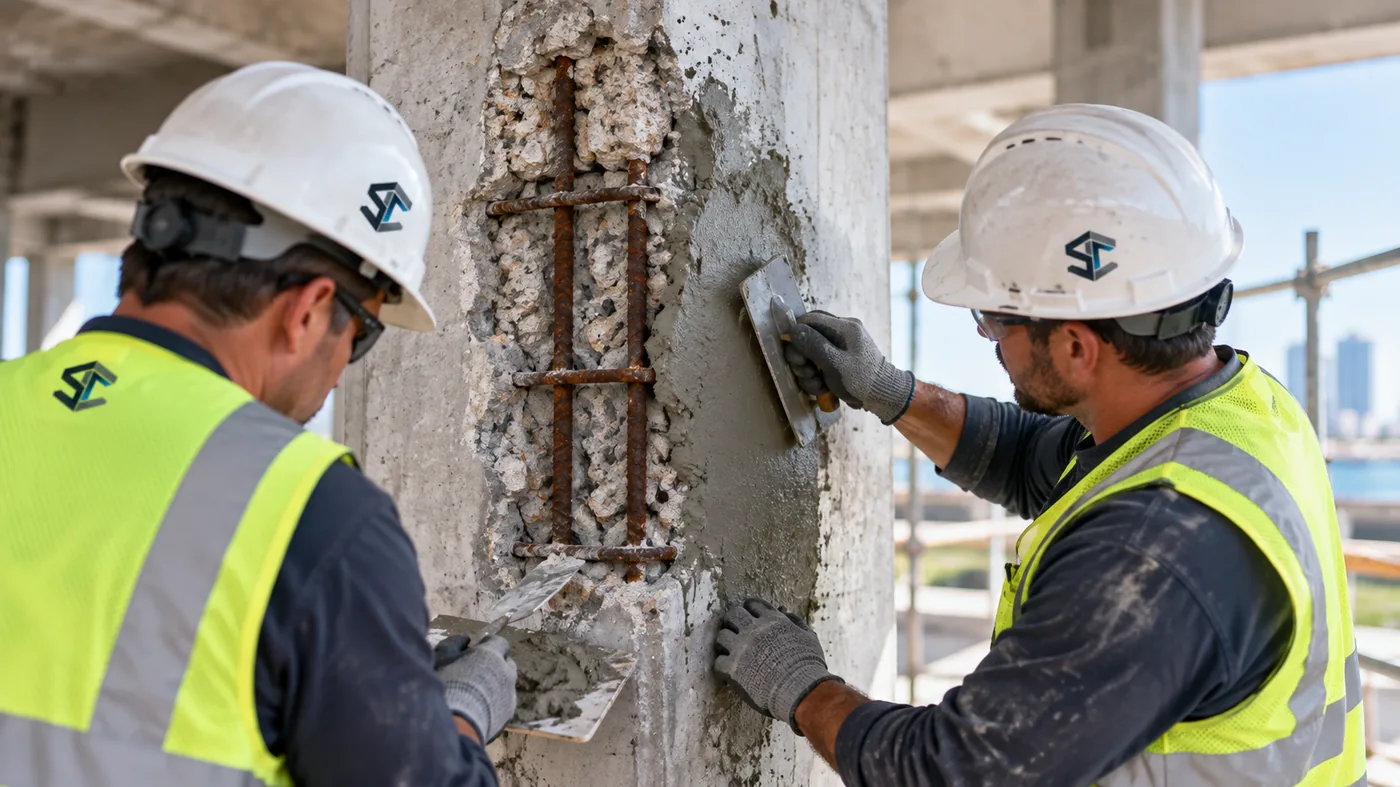
Concrete Repair & Rehabilitation
Concrete rehabilitation removes unsound material, treats contributing causes and rebuilds the section with a compatible repair system designed for the exposure and structural requirement.
Explore service →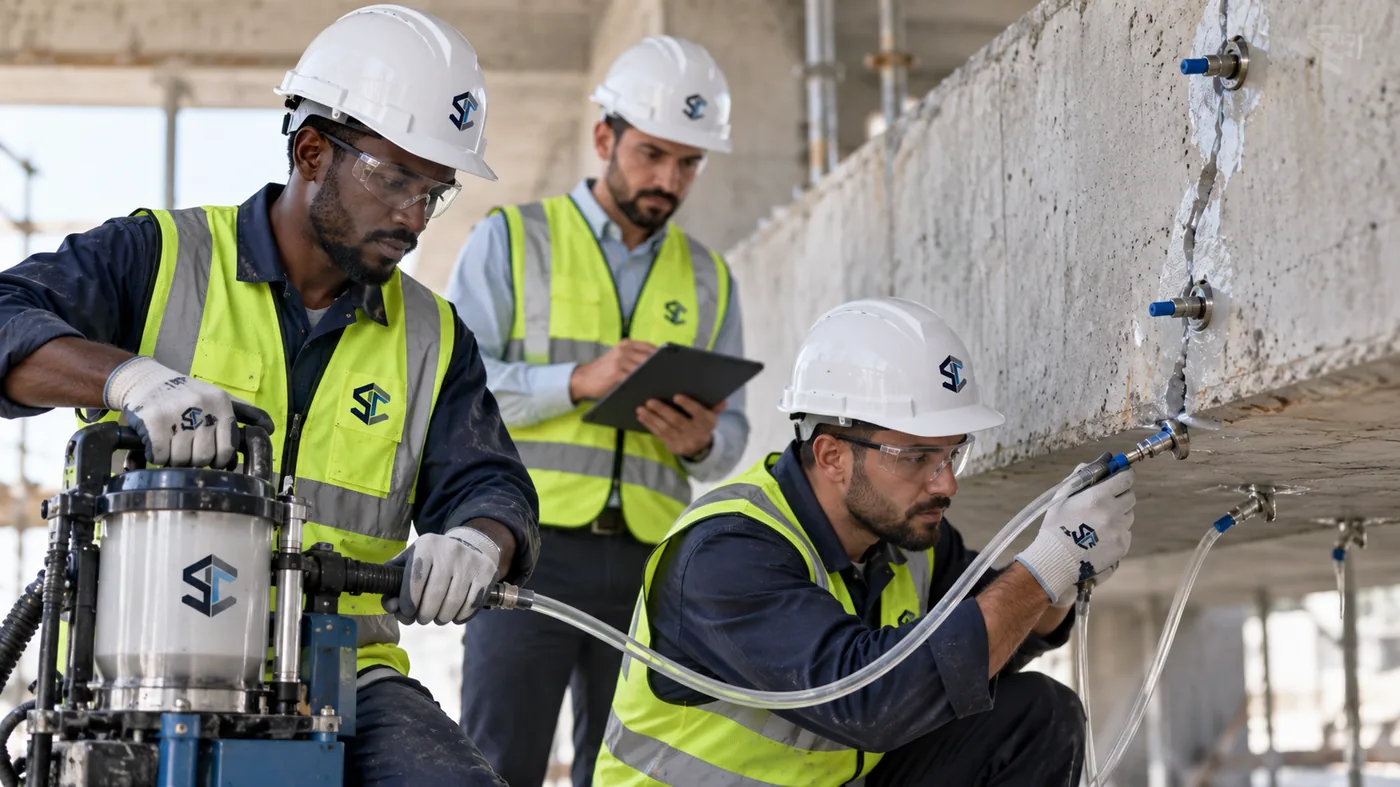
Epoxy Crack Injection
Epoxy injection uses a low-viscosity structural resin to bond suitable, stable cracks in concrete and help restore continuity across the cracked section.
Explore service →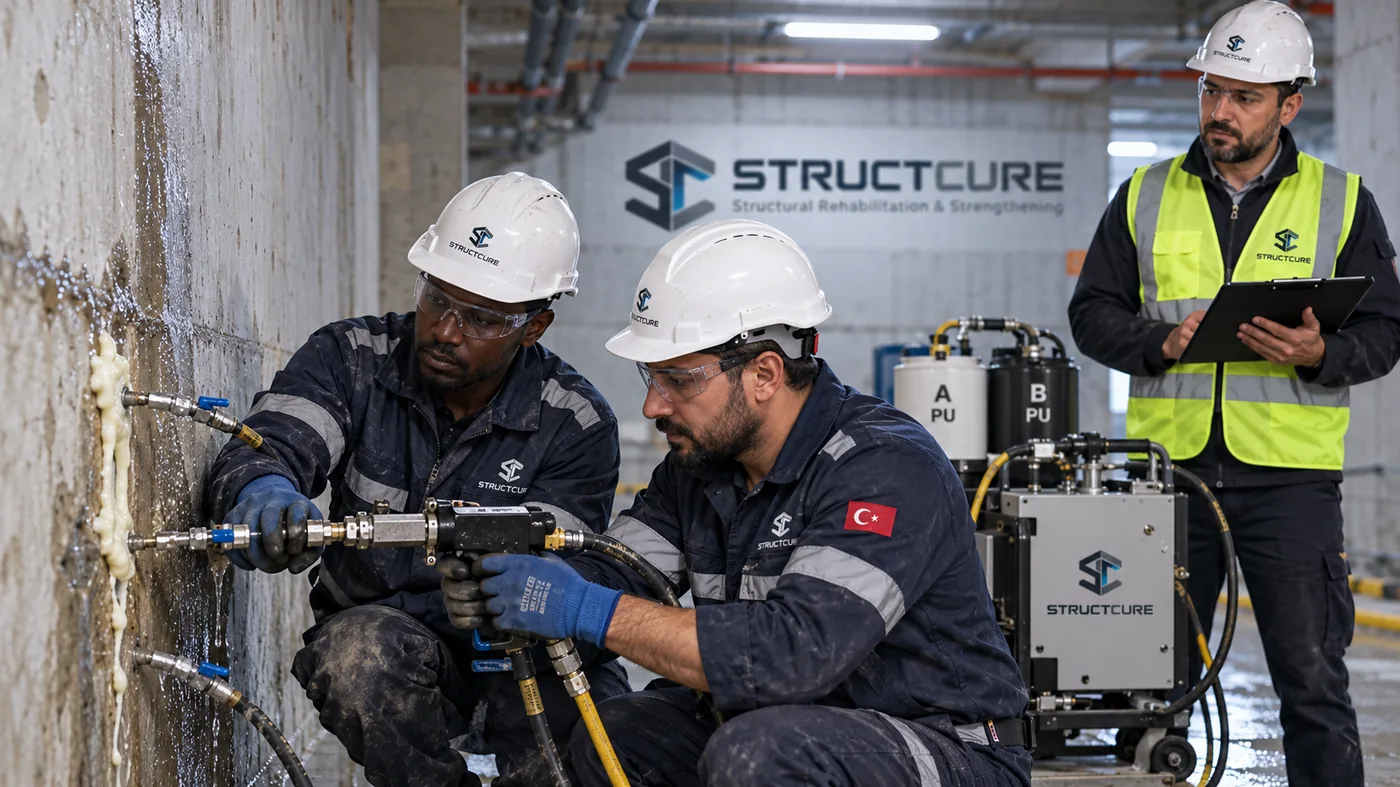
Polyurethane Injection
Polyurethane injection introduces a water-reactive or flexible resin into leakage paths to control water ingress through cracks, joints and voids.
Explore service →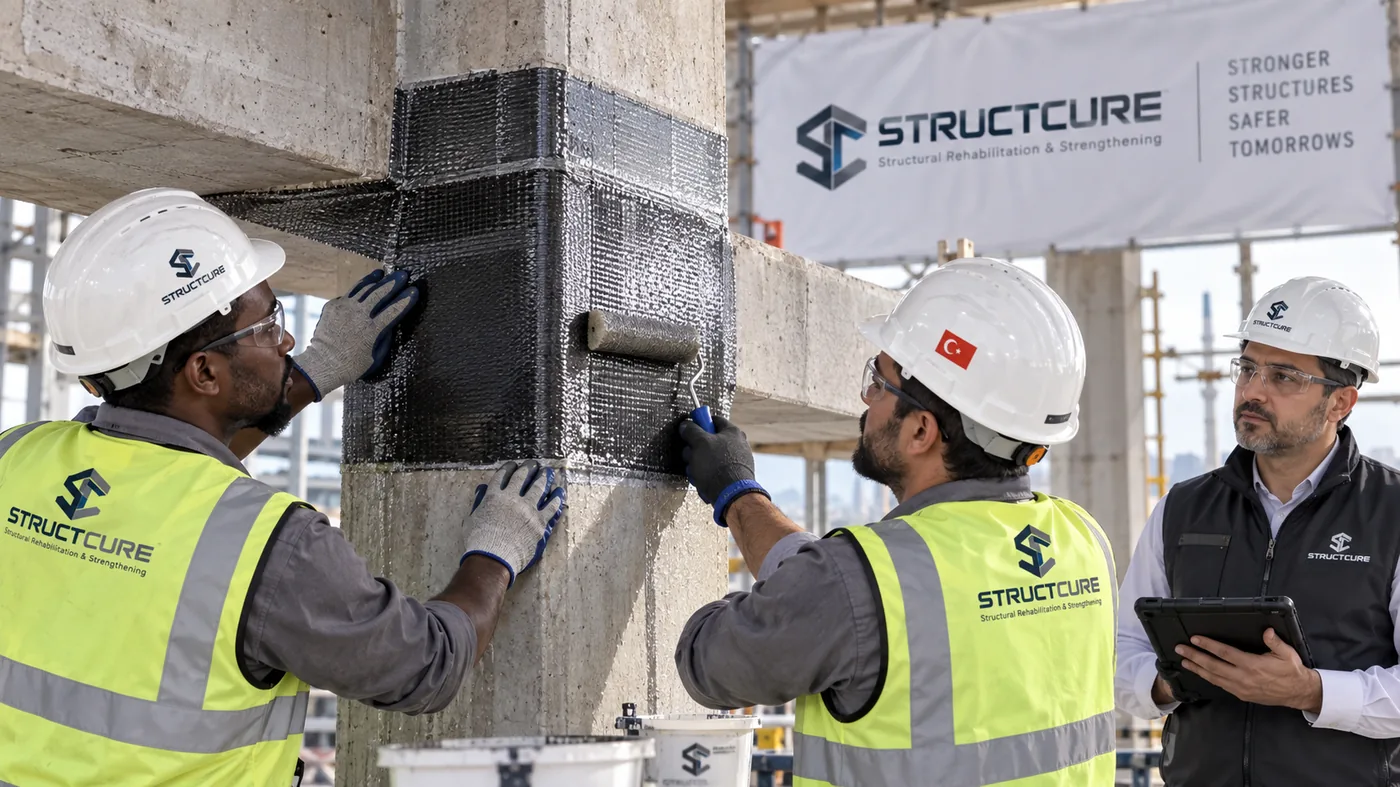
CFRP / Carbon Fiber Structural Strengthening
CFRP strengthening bonds high-strength carbon-fiber reinforcement to prepared structural elements to increase selected flexural, shear or confinement capacity with little added weight.
Explore service →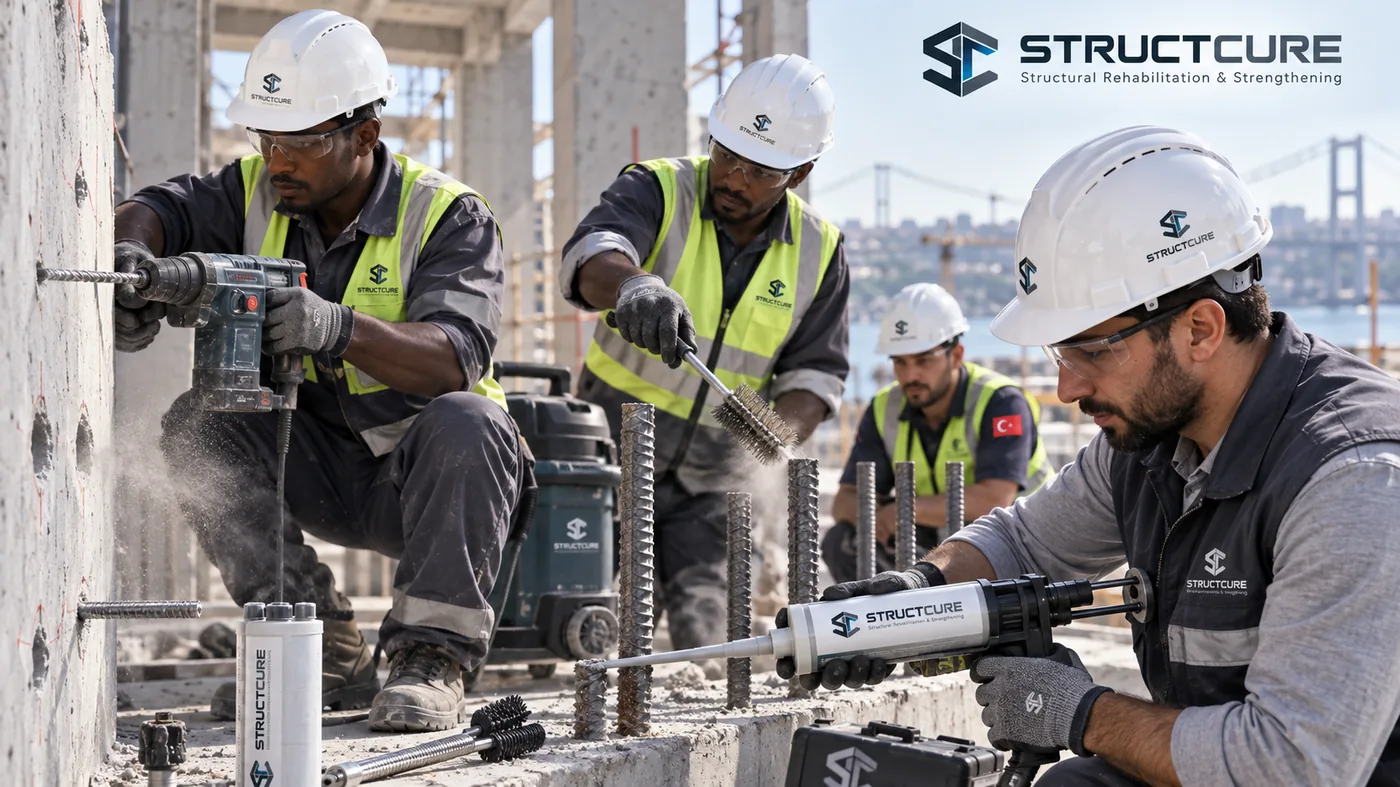
Chemical Anchoring & Post-Installed Rebar
Chemical anchoring bonds threaded rods or reinforcing bars into drilled holes using a qualified resin system selected for the substrate, load and service environment.
Explore service →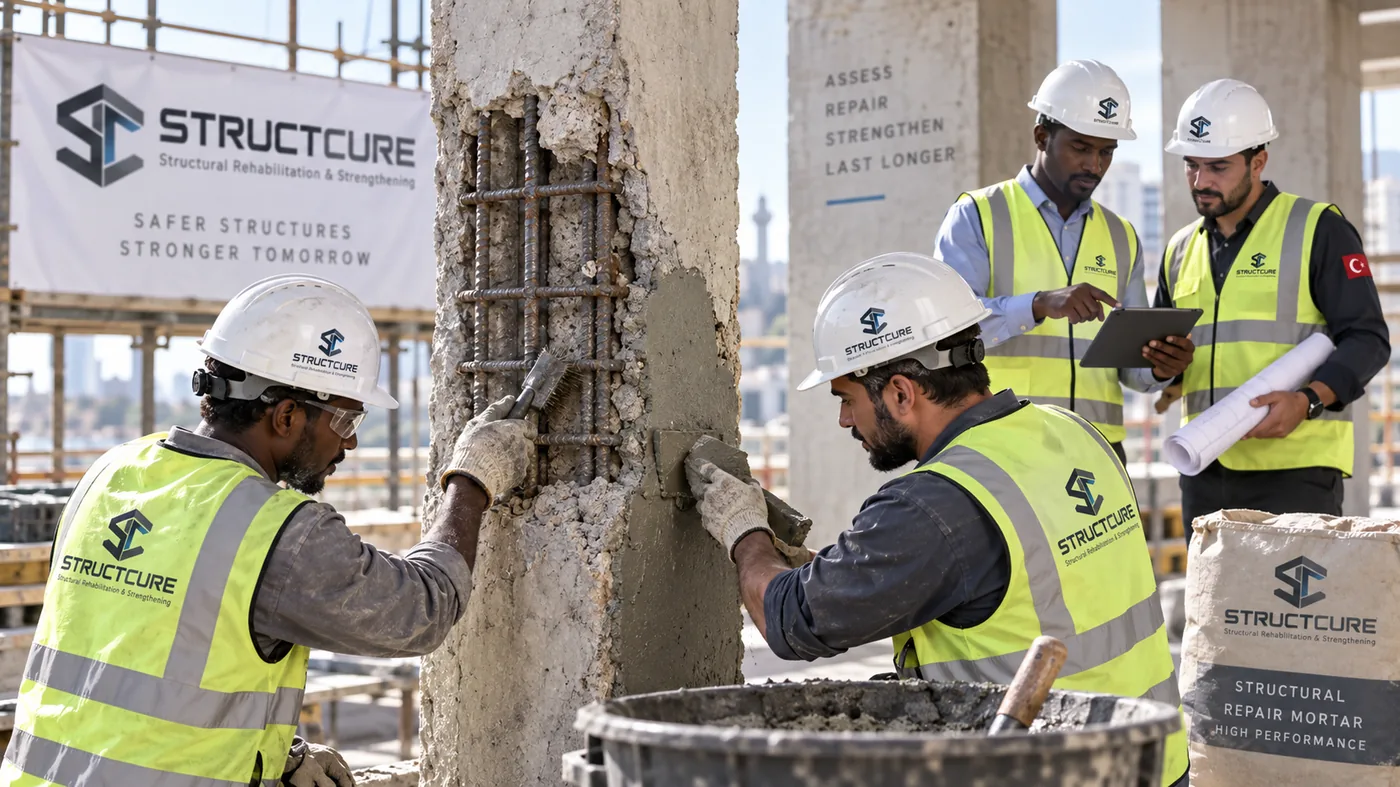
Structural Bonding
Structural bonding uses compatible resin systems to create force-transferring connections between prepared concrete, steel, precast elements or repair materials.
Explore service →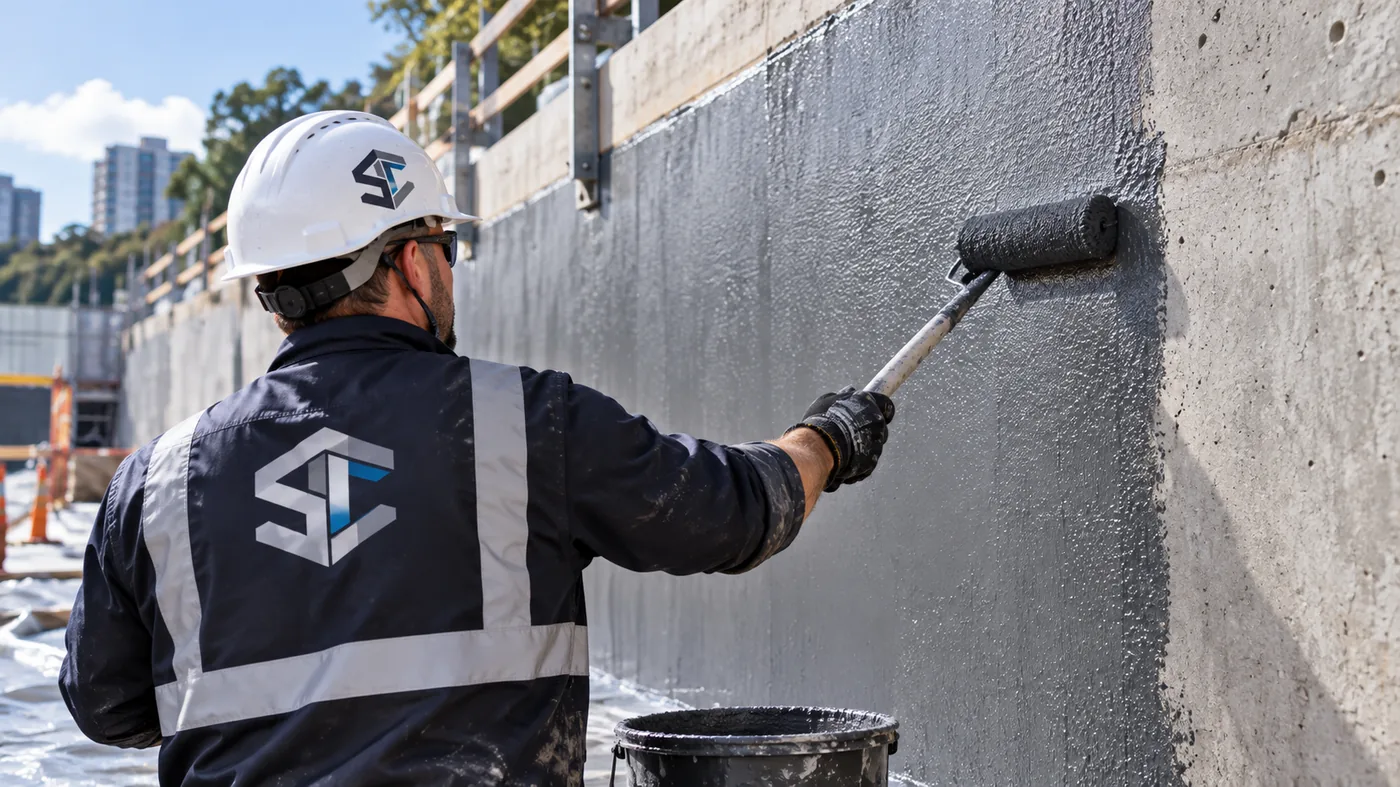
Waterproofing & Protective Systems
Waterproofing and protective systems reduce water, chemical and environmental exposure after defects, joints and substrate conditions have been properly addressed.
Explore service →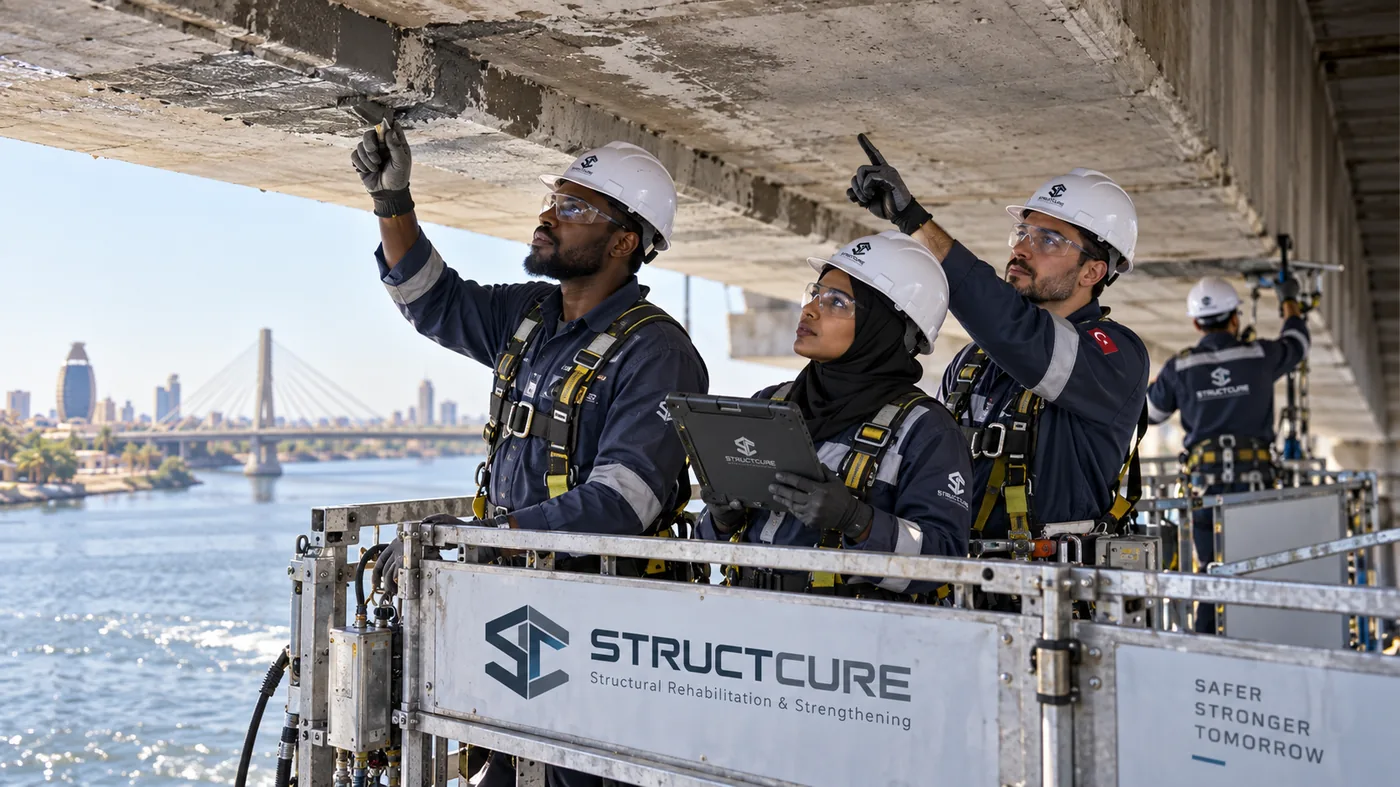
Bridge & Infrastructure Rehabilitation
Bridge rehabilitation combines condition-led repair, strengthening, protection and staged execution to extend the safe service life of infrastructure assets.
Explore service →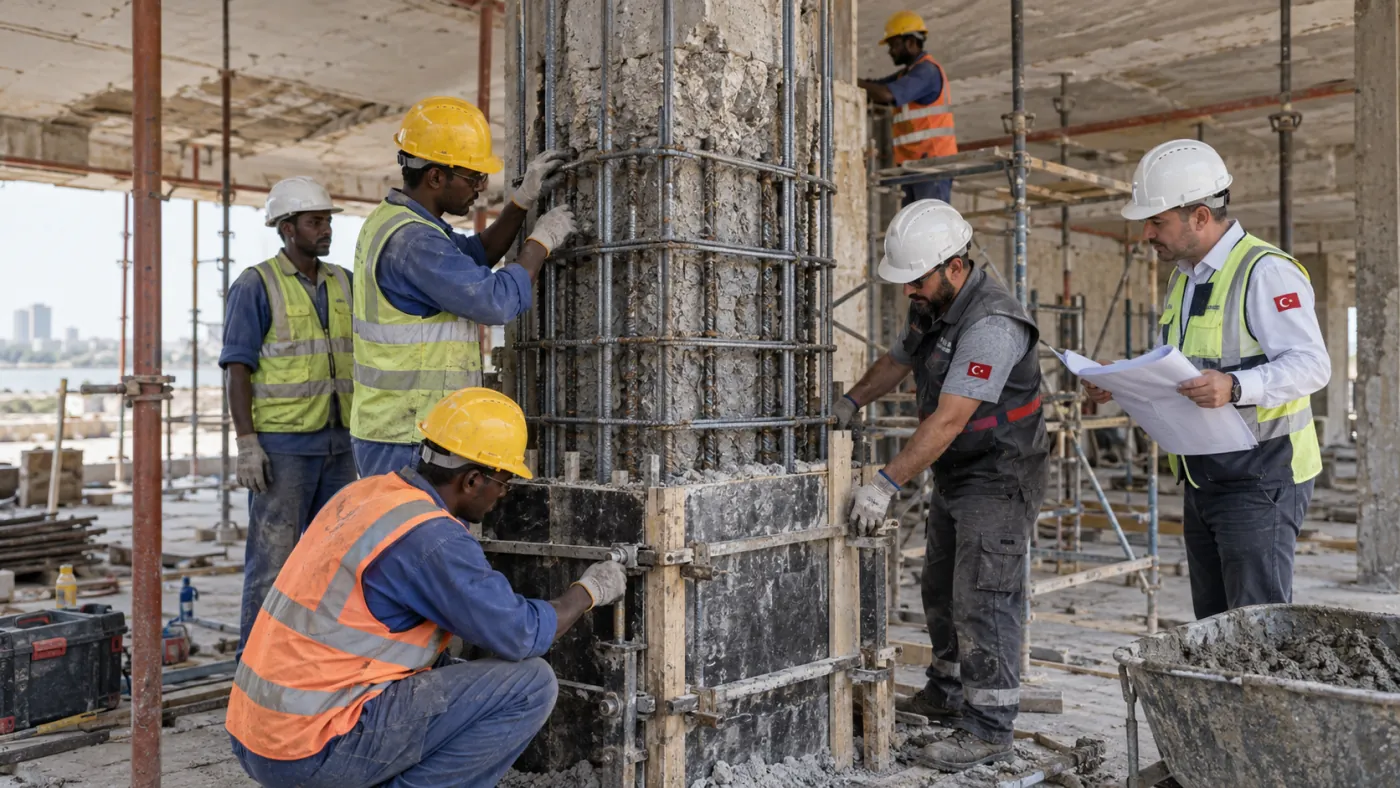
Reinforced Concrete Jacketing
Reinforced-concrete jacketing adds designed reinforcement and a compatible concrete or mortar jacket to improve selected member capacity, stiffness or confinement.
Explore service →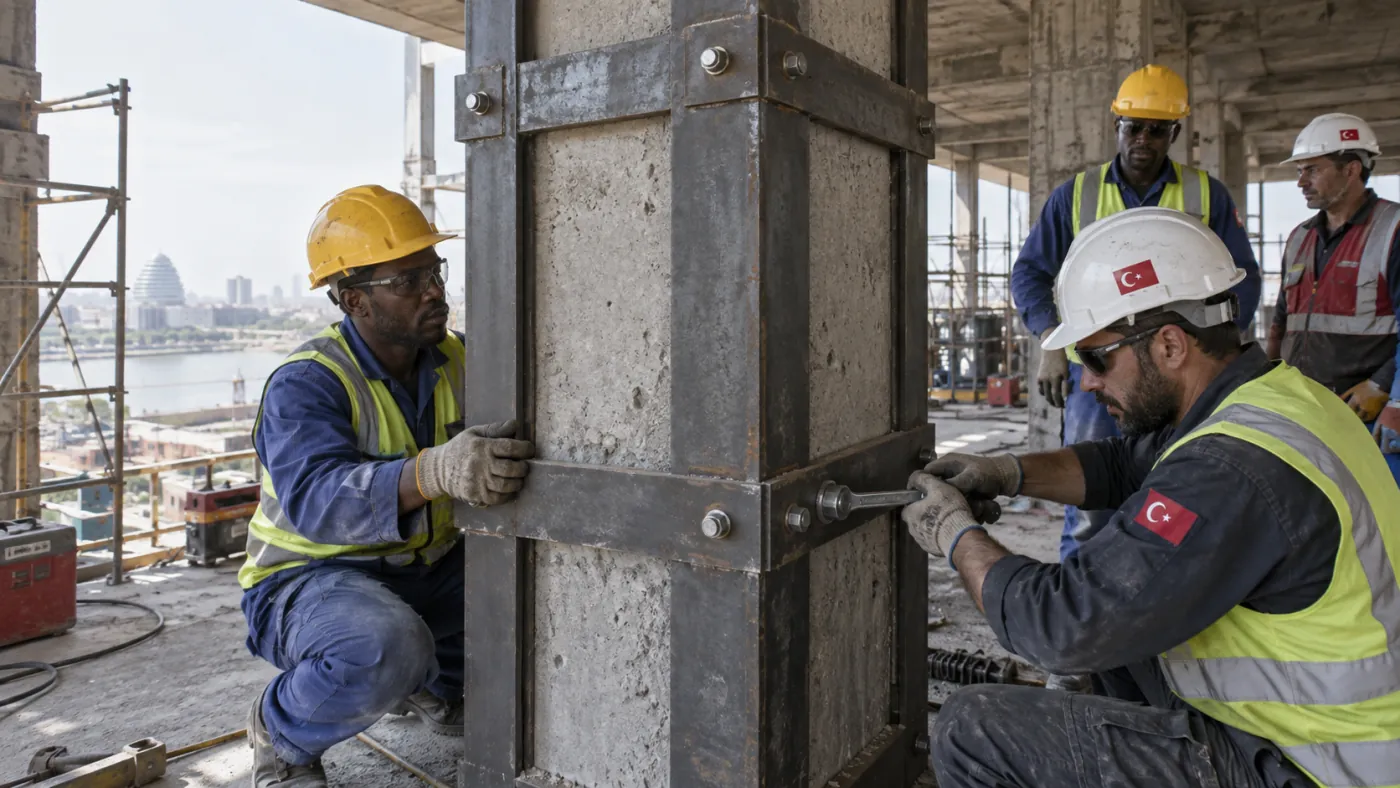
Steel Jacketing & Mechanical Strengthening
Steel and mechanical strengthening uses designed plates, angles, channels, frames or confinement elements to modify selected structural performance through anchored, bolted or specified welded connections.
Explore service →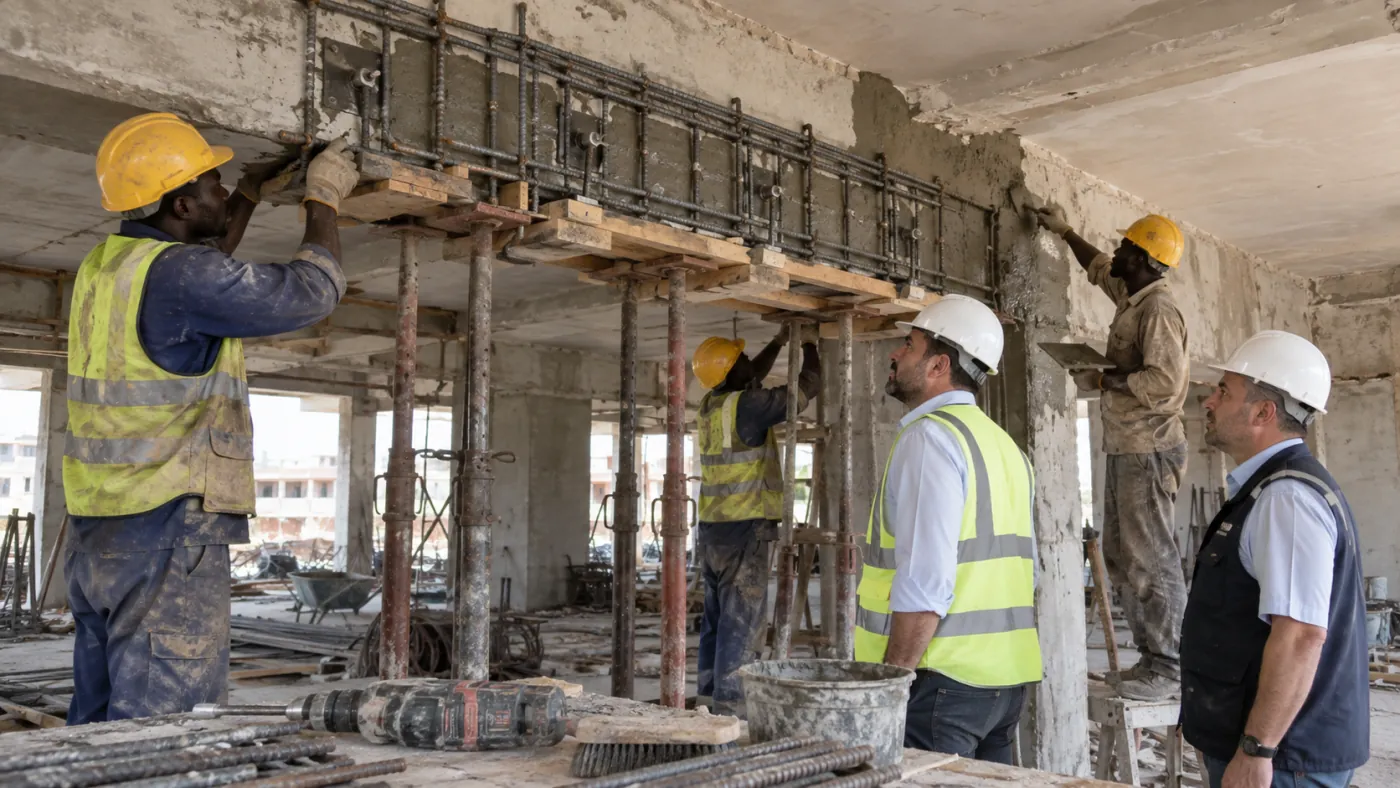
Beam, Column & Slab Strengthening
Structural members can be strengthened using reinforced-concrete enlargement, steel systems, CFRP, post-installed reinforcement or combined solutions selected from the verified performance requirement.
Explore service →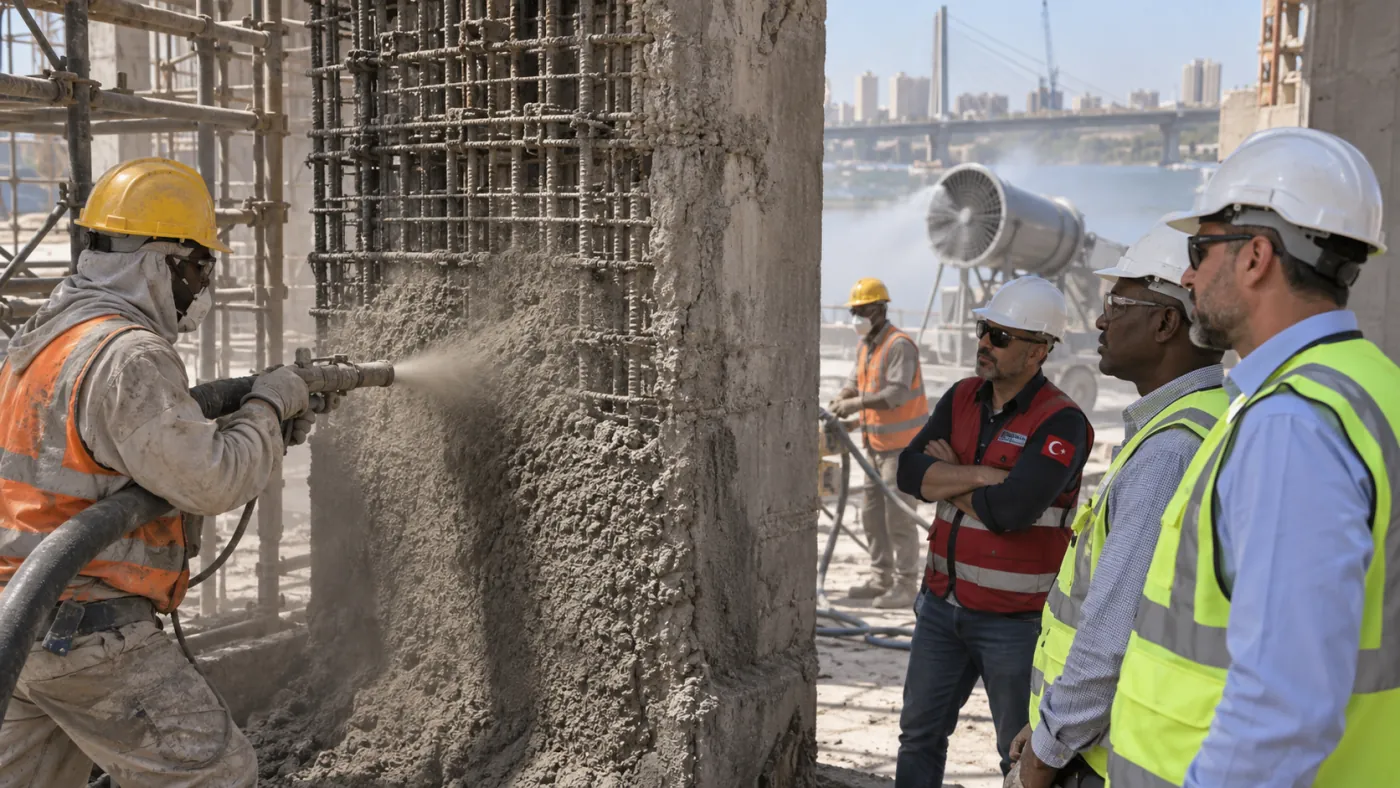
Shotcrete Strengthening
Shotcrete strengthening applies sprayed concrete or mortar to a correctly prepared and detailed substrate, often with designed mesh or reinforcement, to build a repair or strengthening layer.
Explore service →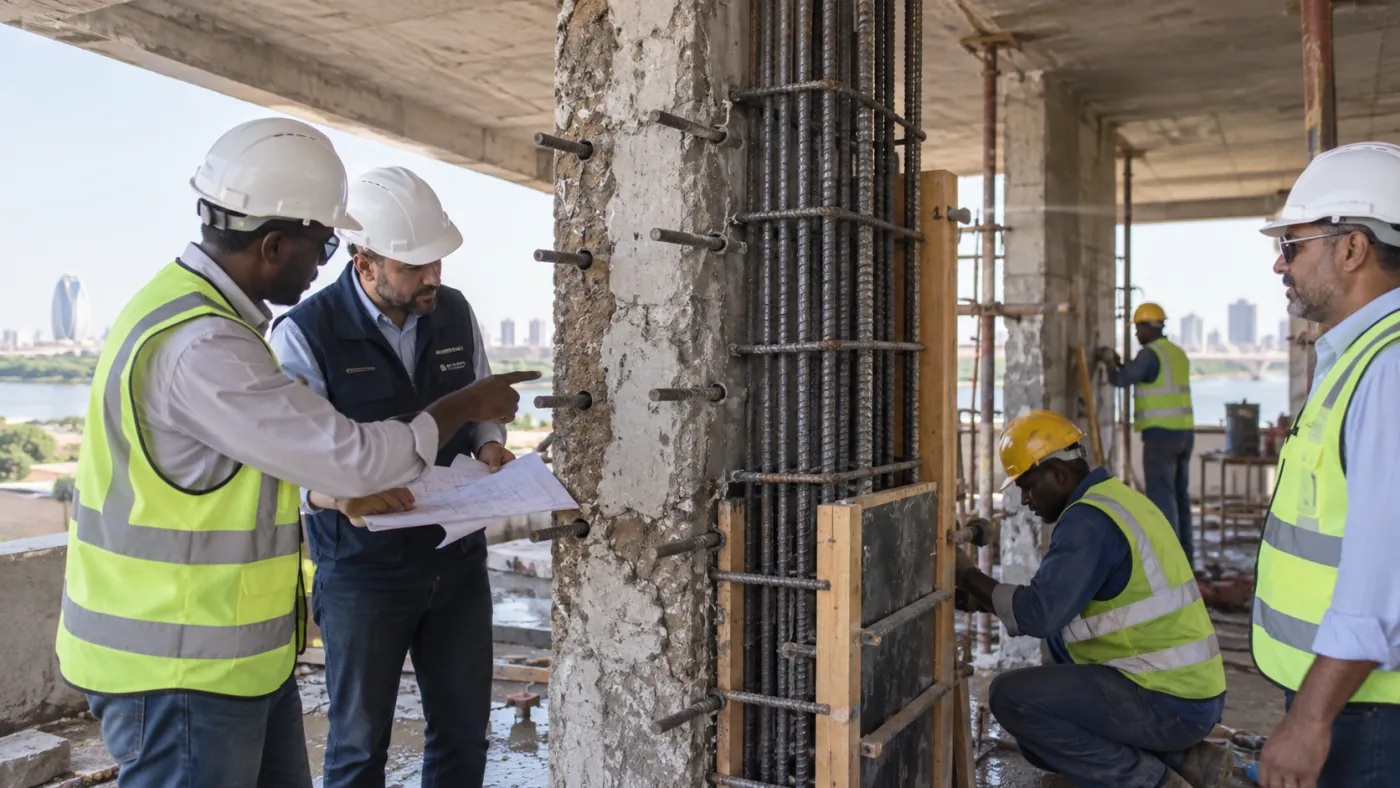
Column Section Enlargement
Column section enlargement builds a larger reinforced section around an existing column where verified design requires additional capacity, stiffness or confinement.
Explore service →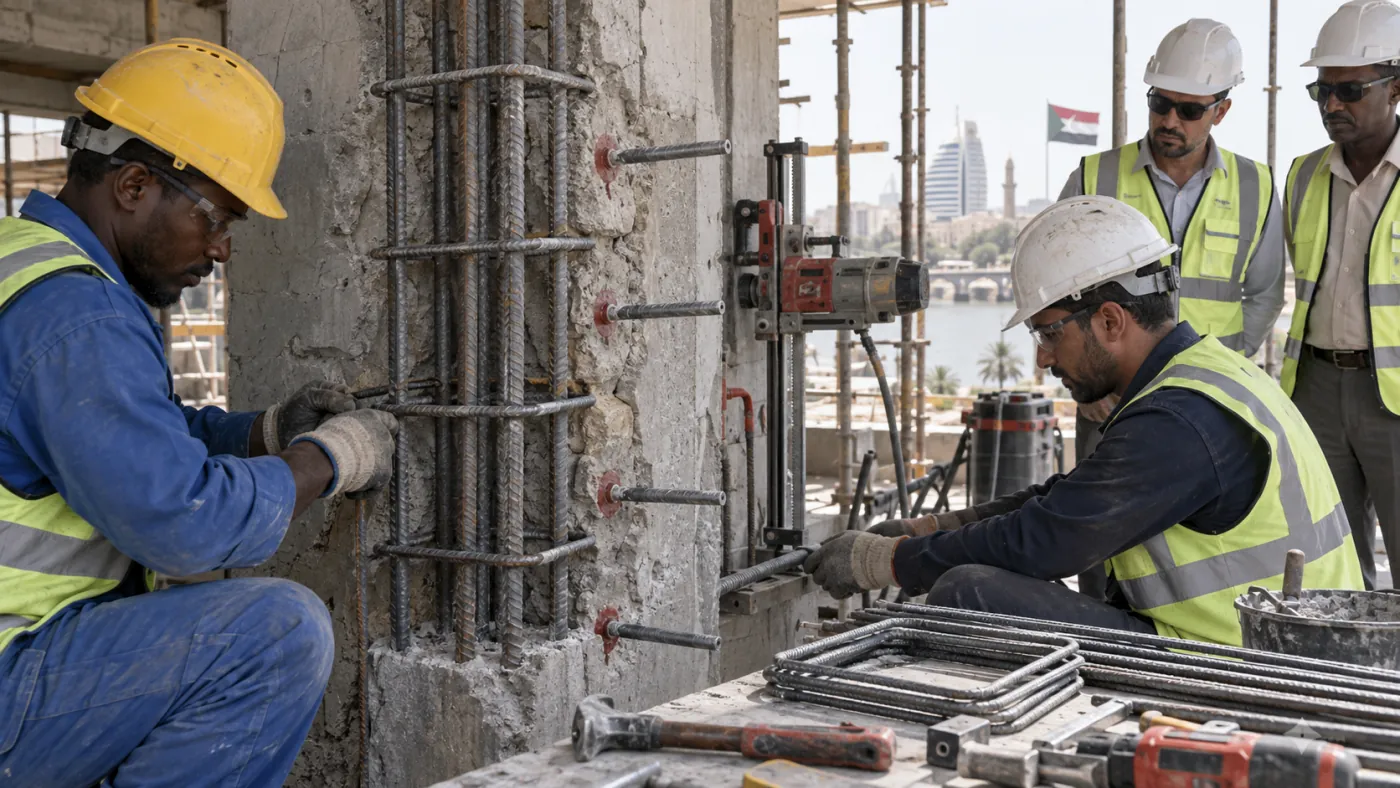
Post-Installed Reinforcement
Post-installed reinforcement connects new reinforcing bars or dowels to existing concrete through designed drilled-hole systems that form part of a verified structural detail.
Explore service →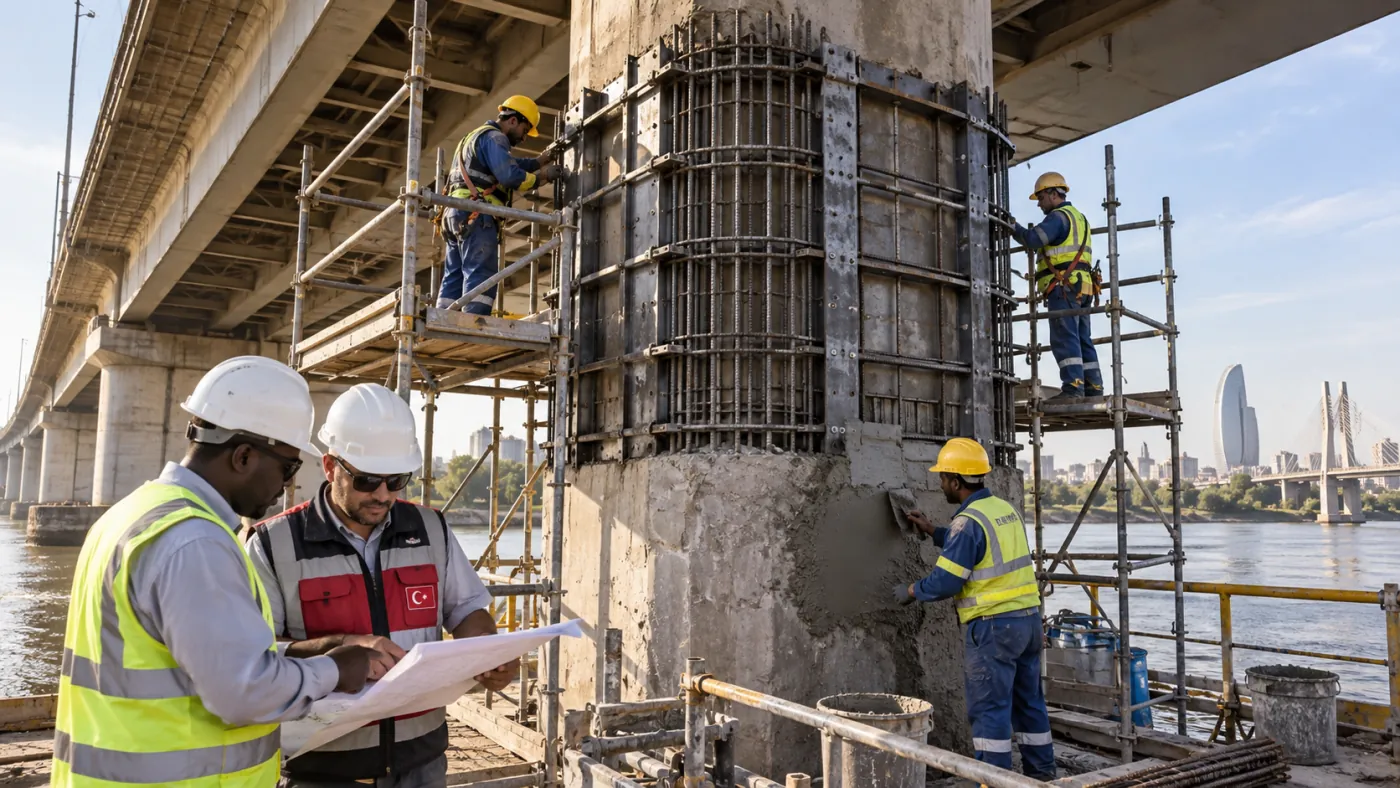
Bridge Pier Strengthening
Bridge pier strengthening combines condition-led repair, confinement, section enlargement, added reinforcement or steel systems to improve verified substructure performance.
Explore service →Choosing the right route
No. The method and material system should follow the verified defect, substrate, exposure, design requirement and access constraints.
No. Repair addresses deterioration or damage; strengthening changes selected structural performance. Some projects require both.
No. CFRP, reinforced-concrete jacketing, steel systems and shotcrete can be alternatives or complementary methods. Engineering requirements, substrate, geometry, access, durability, fire and load effects govern selection.
Waterproofing may manage exposure, but structural movement, load paths and defective joints must be assessed and addressed separately.
Not sure which method you need?
Describe the symptom, structure and available evidence. We will help frame the appropriate next technical step.