What is steel jacketing & mechanical strengthening?
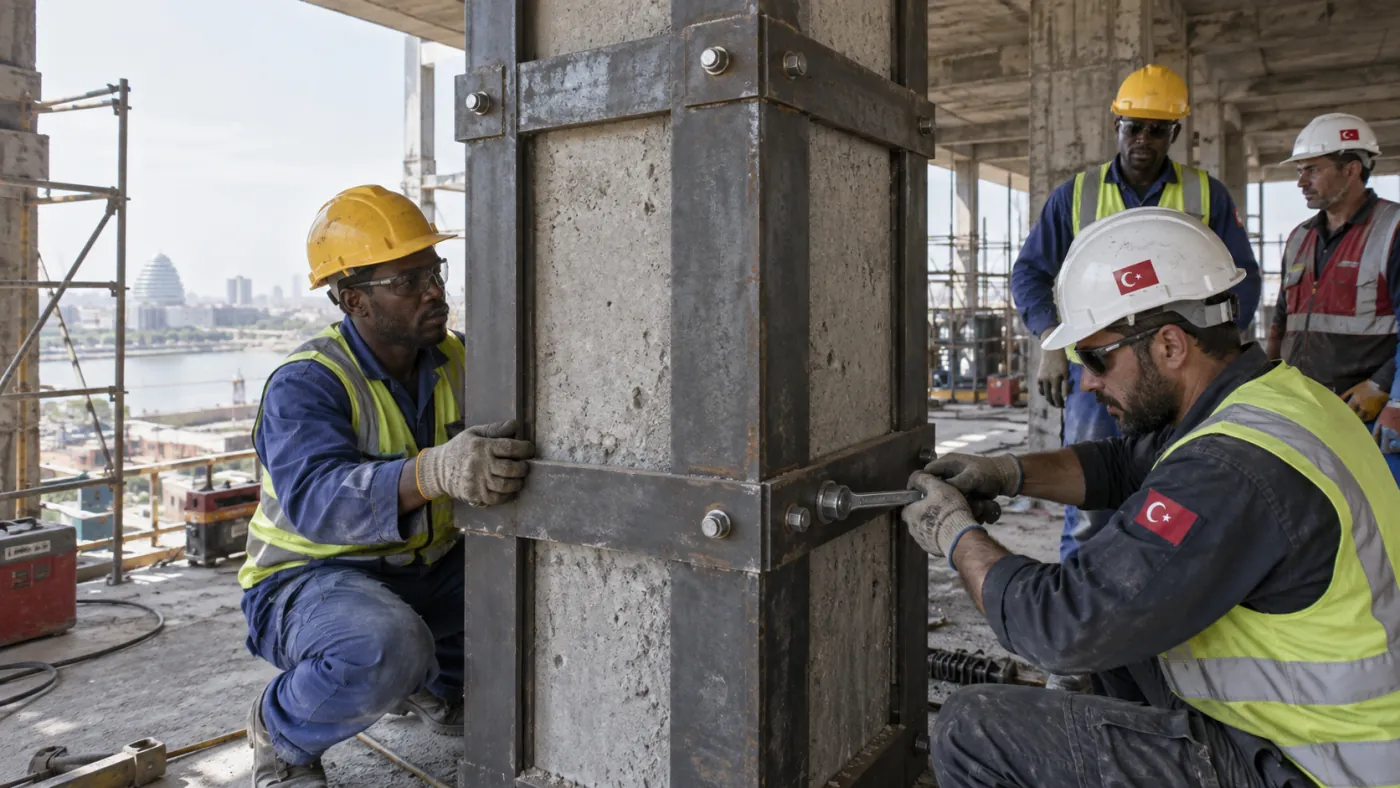
Steel and mechanical strengthening uses designed plates, angles, channels, frames or confinement elements to modify selected structural performance through anchored, bolted or specified welded connections.
What it solves
It may be considered where geometry, access, load path and construction constraints favor a steel retrofit and the supporting concrete, connections and durability strategy can be verified.
When it may not be suitable
Steel systems require verified load transfer, connection design, tolerances and erection sequence. Corrosion, fire, fatigue, exposed edges, dissimilar materials and long-term inspection must be addressed.
Typical applications
- Steel column jackets and confinement
- Steel plate strengthening
- Angles, channels and local frames
- Bolted or mechanically anchored retrofit systems
Execution workflow
- Review assessment and design basis
- Confirm method, access and compatible system
- Prepare substrate and control the work area
- Install or apply under documented procedure
- Inspect, record and hand over
Materials and systems
Systems can include fabricated steel profiles and plates, bolts, designed anchors, non-shrink bedding or grout, specified welds where appropriate, interface details and corrosion or fire protection.
Product families are selected generically at planning stage and specified only after compatibility, performance requirements and site conditions are confirmed.
Quality control approach
Controls are matched to the intervention and may include substrate acceptance, batch and shelf-life checks, mixing records, temperature and moisture readings, installation sequencing, pull-off or proof testing where specified, photographic records and signed inspection points.
Limitations and engineering considerations
What we need before we recommend this method
A photograph can help start the conversation, but it cannot establish a structural diagnosis on its own. Useful inputs include:
- Photographs showing the wider structure and the defect
- Available drawings, reports or previous repair records
- Crack, leakage or deterioration history
- Known movement, loading or change-of-use information
- Access, occupancy and shutdown constraints
- Available substrate tests or condition data
Frequently asked questions
It may be considered where geometry, access, load path and construction constraints favor a steel retrofit and the supporting concrete, connections and durability strategy can be verified.
No. Suitability depends on verified condition, engineering requirements, substrate, exposure, access and the intended service life. Project-specific assessment and design may be required.
The project method should define substrate acceptance, material checks, environmental limits, installation records, hold points, inspection and handover documentation appropriate to the system.