
Useful answers before the repair starts.
Direct, responsible guidance on structural repair methods, their limitations and the evidence needed to select them.
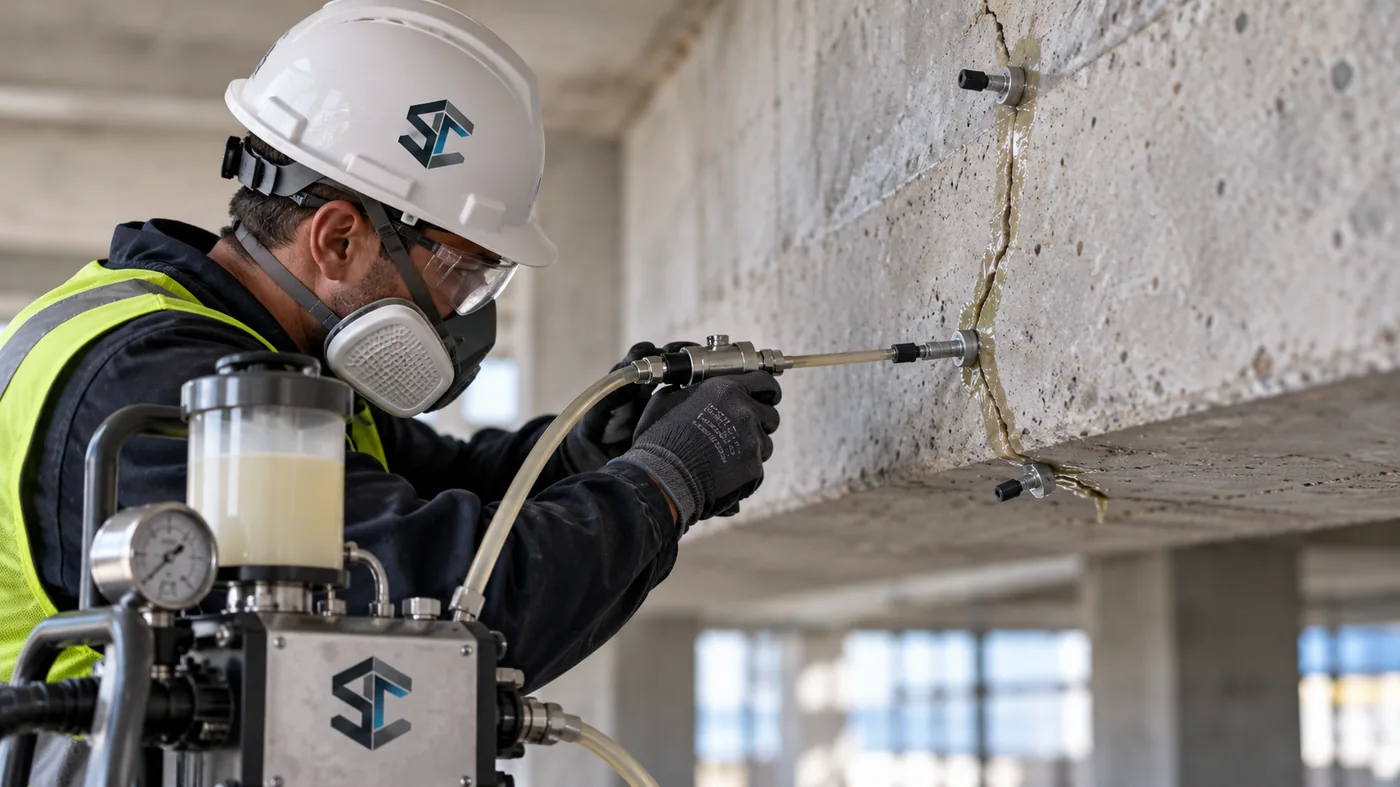
Epoxy Injection vs Polyurethane Injection
Epoxy injection is primarily a structural bonding method for suitable stable cracks; polyurethane injection is primarily a water-control method for leakage paths. They solve different problems and are not interchangeable.
Read article →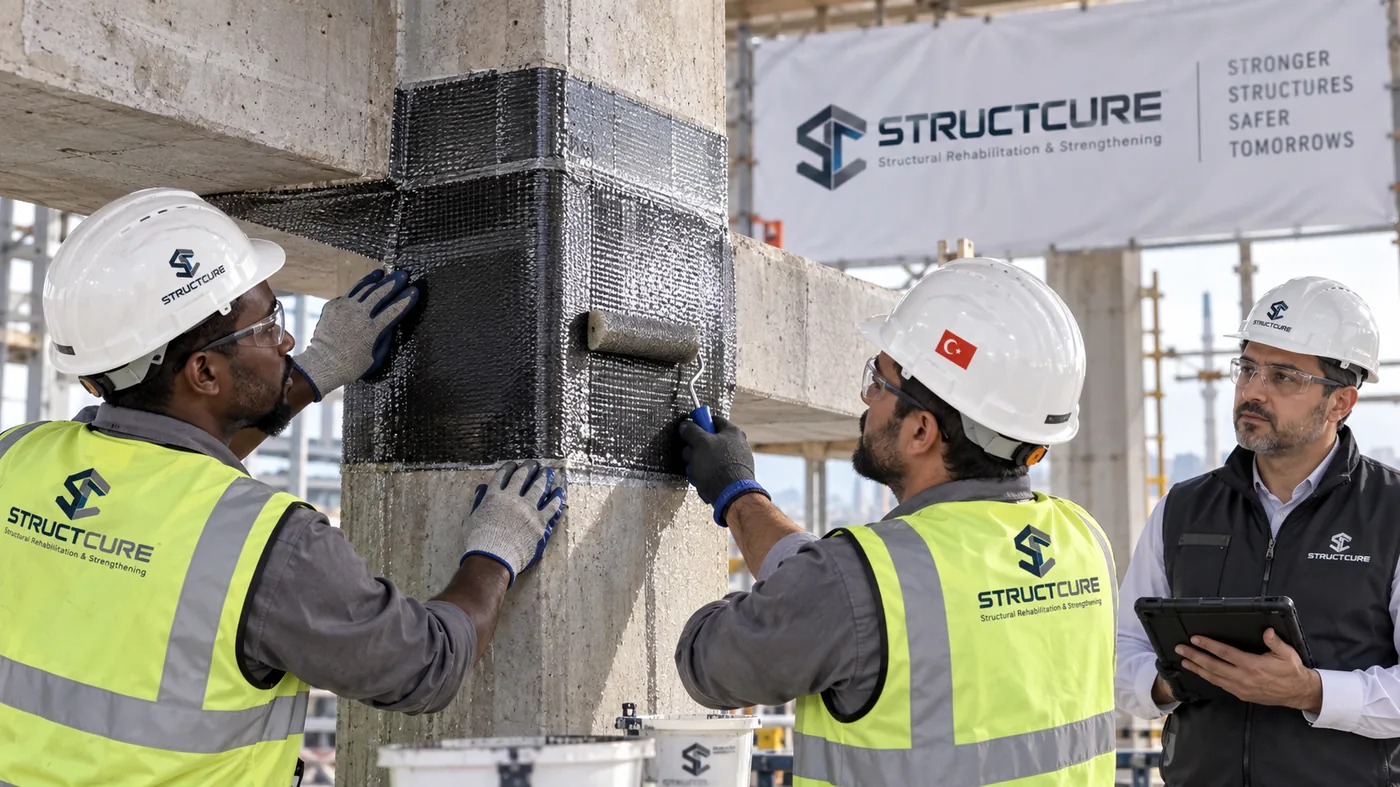
What Is CFRP Structural Strengthening?
CFRP strengthening uses carbon-fiber reinforcement bonded to prepared structural elements to add selected tensile, shear or confinement capacity with minimal added weight and thickness.
Read article →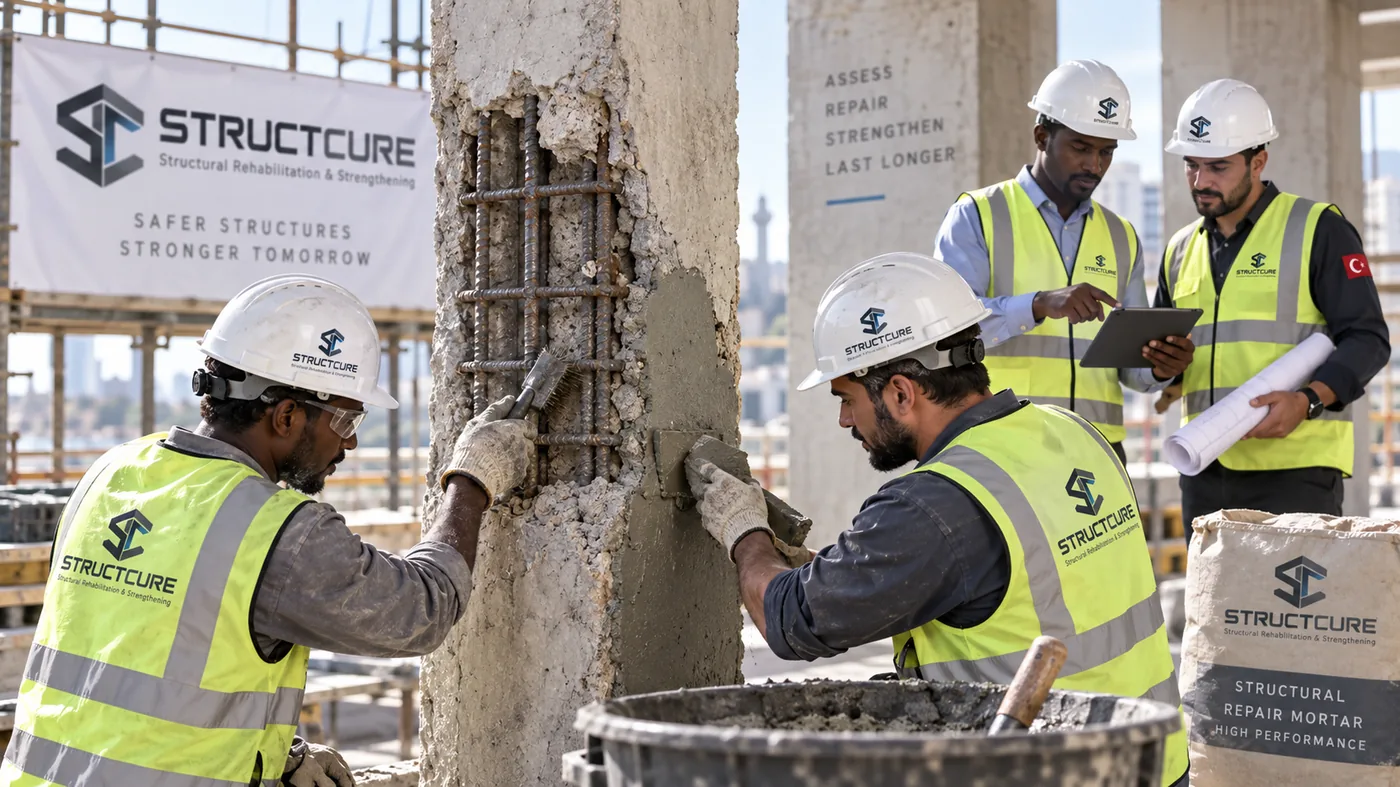
When Should a Concrete Structure Be Rehabilitated?
Concrete rehabilitation should be considered when observed deterioration, reduced durability, changing use or verified capacity concerns can be addressed through a controlled intervention that offers a rational service-life benefit.
Read article →
Structural Cracks vs Non-Structural Cracks
A crack cannot be classified reliably from width or appearance alone. Structural significance depends on cause, location, movement, load path, geometry, history and the condition of the surrounding element.
Read article →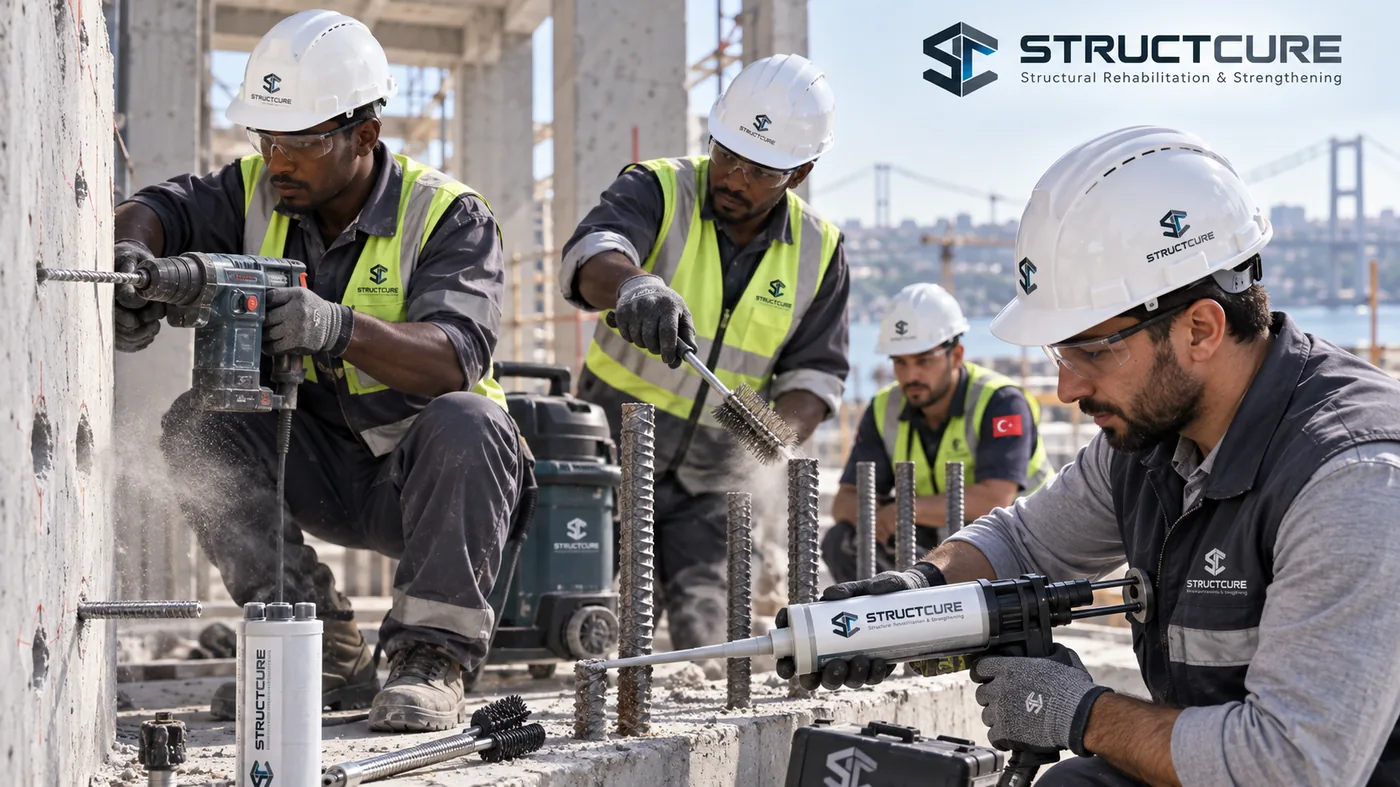
Chemical Anchoring for Post-Installed Rebar
Chemical anchoring bonds reinforcement or threaded rods into drilled holes. Reliable performance depends on engineered geometry, a qualified resin system and disciplined drilling, cleaning, installation and curing.
Read article →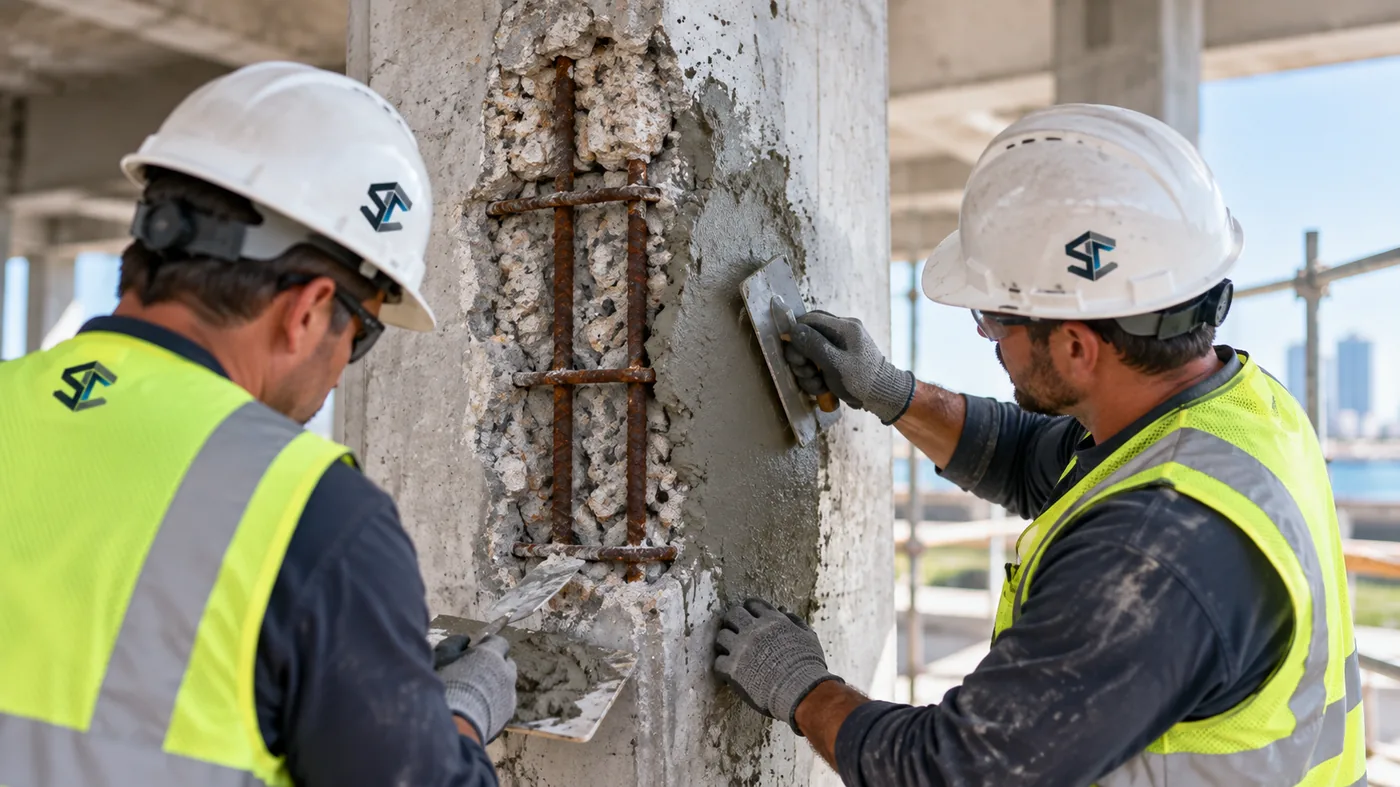
Concrete Spalling: Causes and Repair Principles
Concrete spalling is the loss or detachment of surface concrete. A durable repair removes unsound material, addresses the deterioration mechanism and rebuilds the section with compatible materials.
Read article →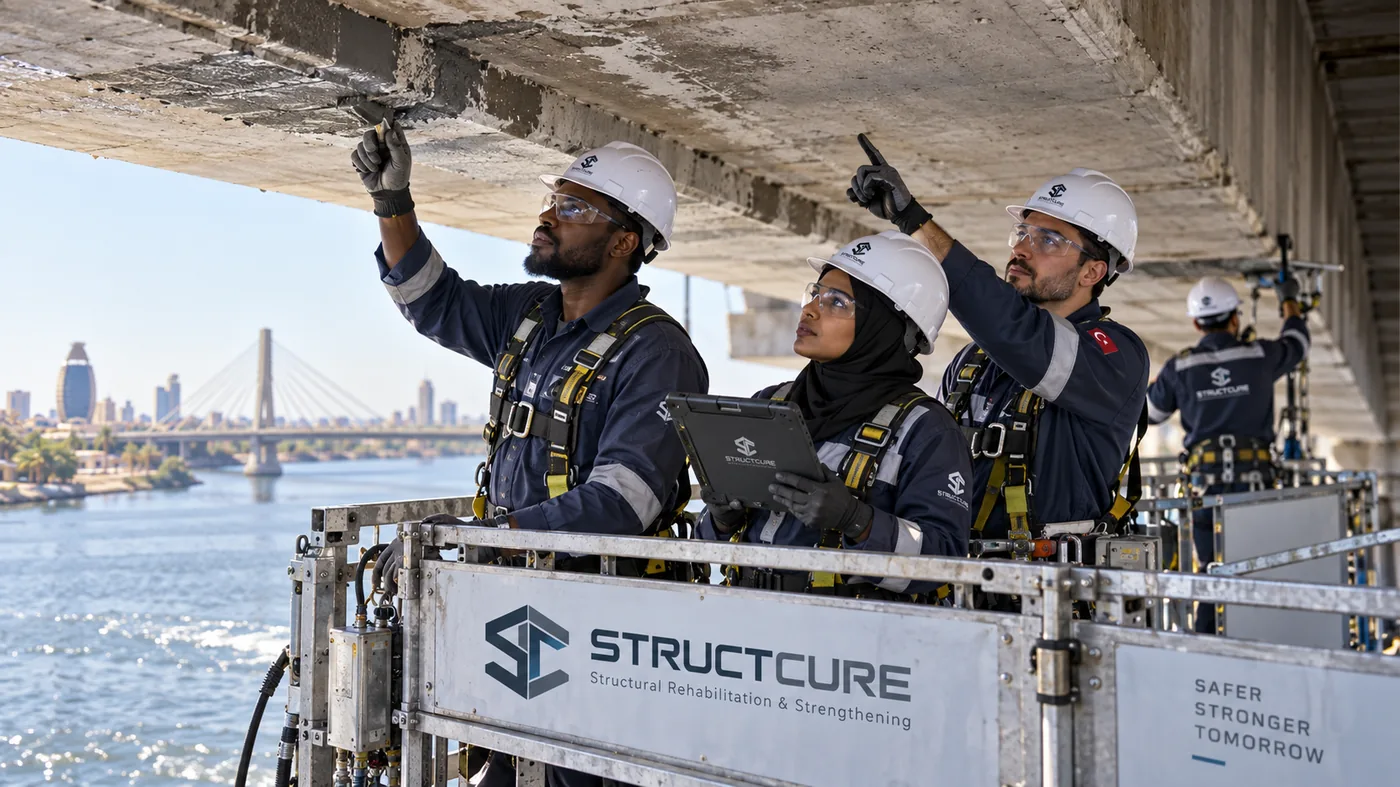
Bridge Rehabilitation vs Replacement
Rehabilitation is preferable when verified repairs and strengthening can deliver the required safety, durability and service life with acceptable whole-life cost and operational risk; replacement is preferable when they cannot.
Read article →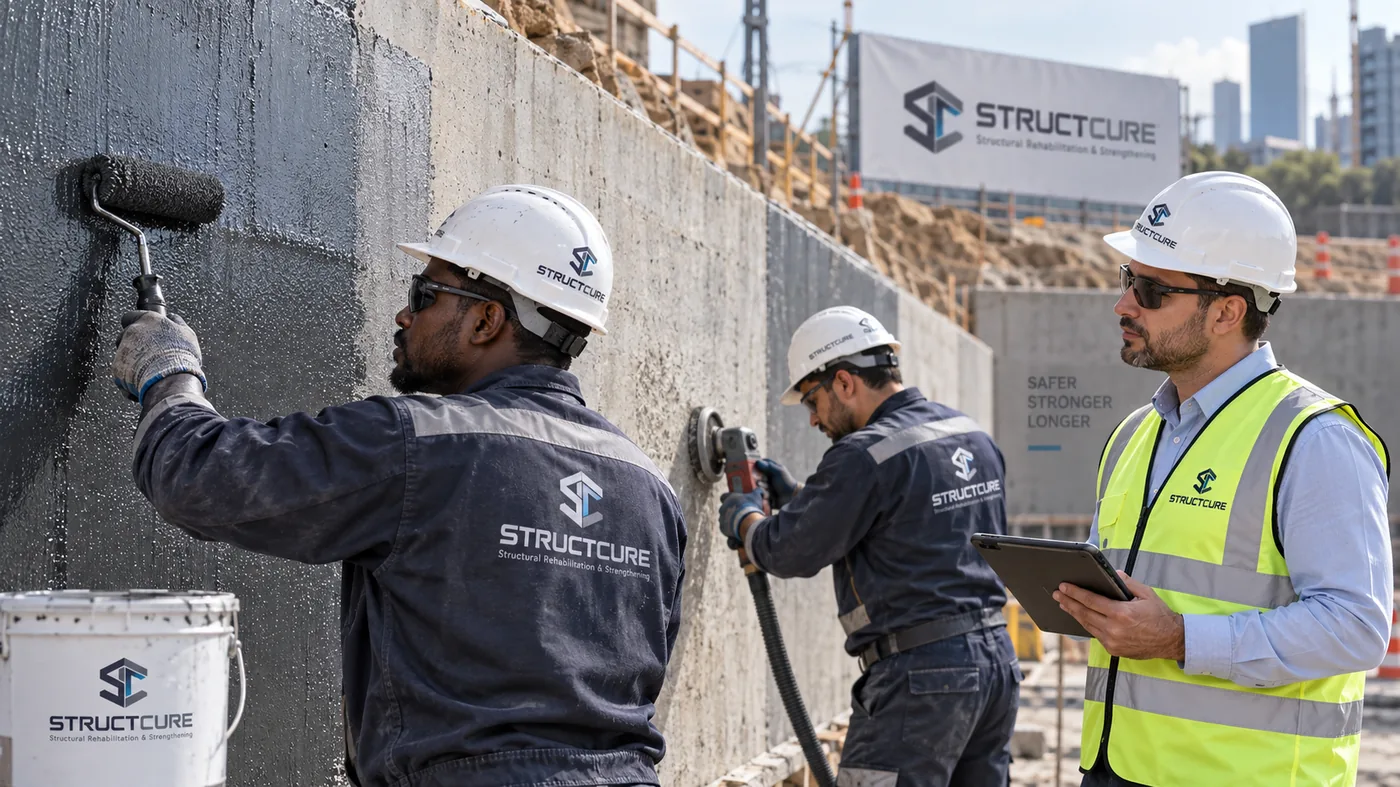
Why Surface Preparation Matters in Structural Repair
Surface preparation creates the clean, sound and correctly profiled substrate that a repair, coating, bonded anchor or CFRP system needs to transfer load and resist separation.
Read article →