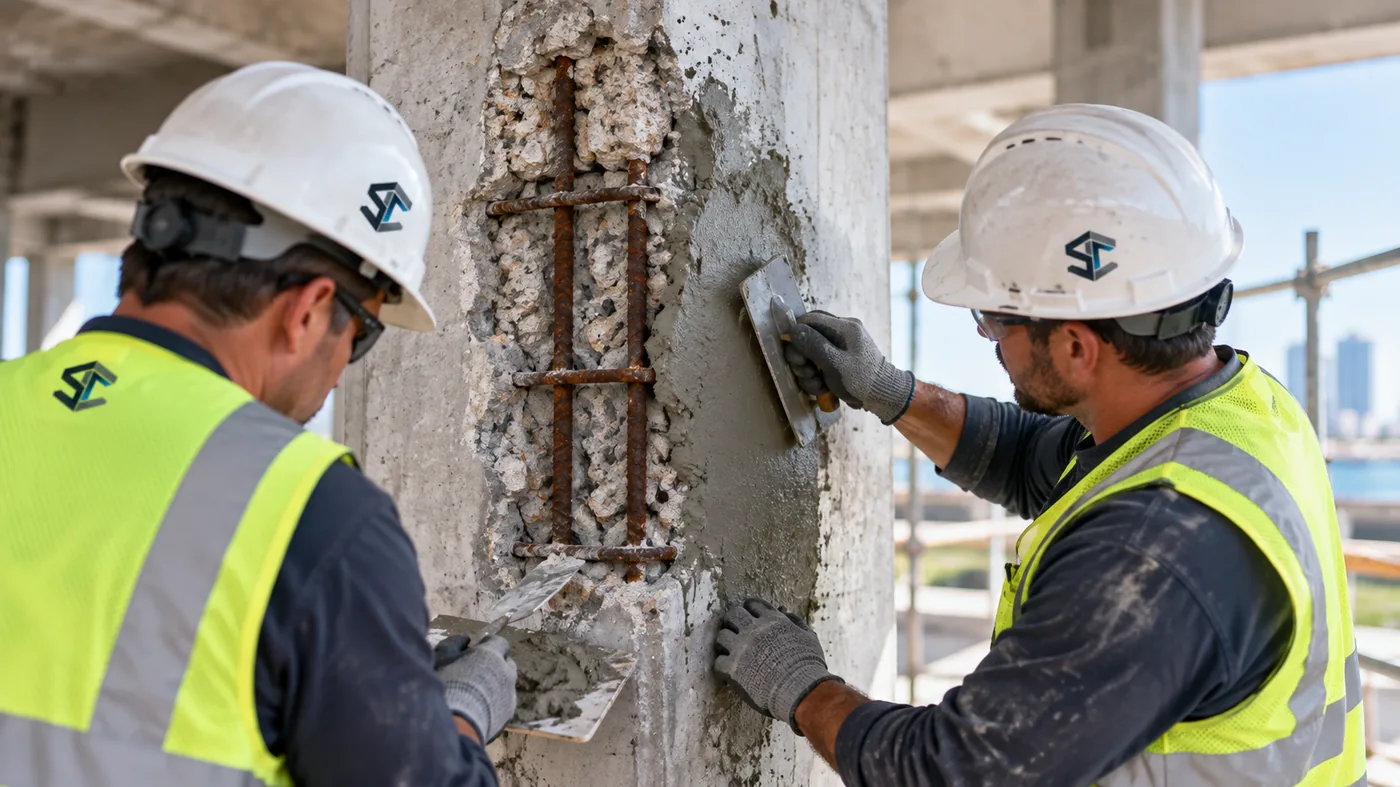
REPRESENTATIVE TECHNICAL APPLICATION
Concrete Rehabilitation
Capability demonstration; not presented as a completed STRUCTCURE project.
Specialist repair, rehabilitation and strengthening solutions for buildings, bridges and critical infrastructure.
Structural assessment support organizes condition evidence, defect mapping and technical inputs so the appropriate repair or strengthening route can be defined by the responsible engineer.
Concrete rehabilitation removes unsound material, treats contributing causes and rebuilds the section with a compatible repair system designed for the exposure and structural requirement.
Epoxy injection uses a low-viscosity structural resin to bond suitable, stable cracks in concrete and help restore continuity across the cracked section.
Polyurethane injection introduces a water-reactive or flexible resin into leakage paths to control water ingress through cracks, joints and voids.
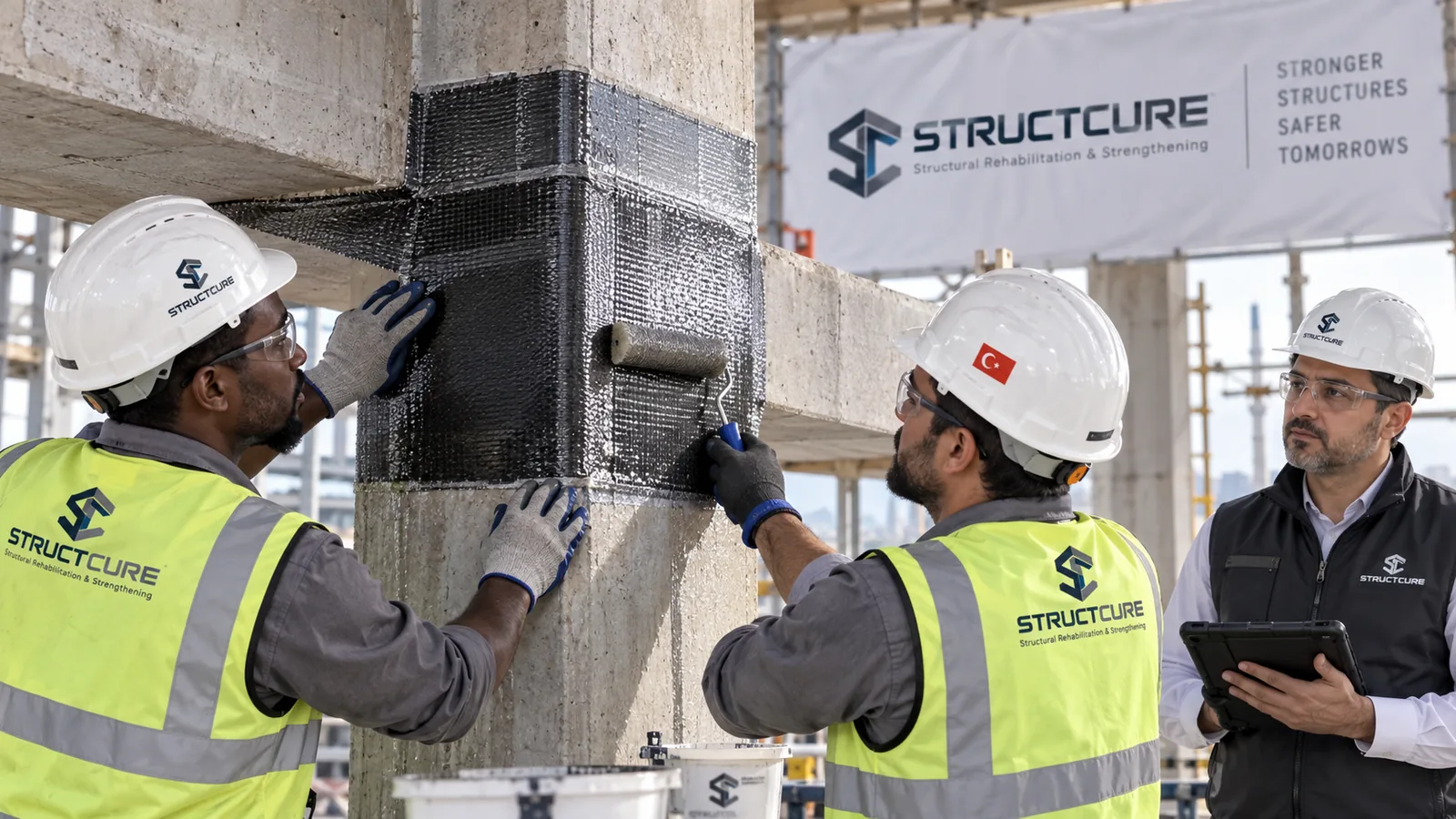
CFRP strengthening bonds high-strength carbon-fiber reinforcement to prepared structural elements to increase selected flexural, shear or confinement capacity with little added weight.
Chemical anchoring bonds threaded rods or reinforcing bars into drilled holes using a qualified resin system selected for the substrate, load and service environment.
Waterproofing and protective systems reduce water, chemical and environmental exposure after defects, joints and substrate conditions have been properly addressed.
Bridge rehabilitation combines condition-led repair, strengthening, protection and staged execution to extend the safe service life of infrastructure assets.
Cosmetic repair changes appearance. Structural rehabilitation responds to verified defects, load paths, material deterioration and service conditions.
STRUCTCURE focuses on diagnosis-led repair, strengthening and protection. The visible finish matters, but it comes after the cause, substrate, compatible system and controlled execution have been addressed.
How STRUCTCURE works →Assessment and design may involve independent engineers, laboratories or technical partners according to project needs.
Understand condition and constraints
Define the verified intervention
Create an acceptable substrate
Execute the specified system
Inspect and document quality
Support durable performance
Depending on structural condition and engineering design, interventions may include reinforced-concrete enlargement, added reinforcement, steel jacketing, steel plates, shotcrete and combined strengthening systems.
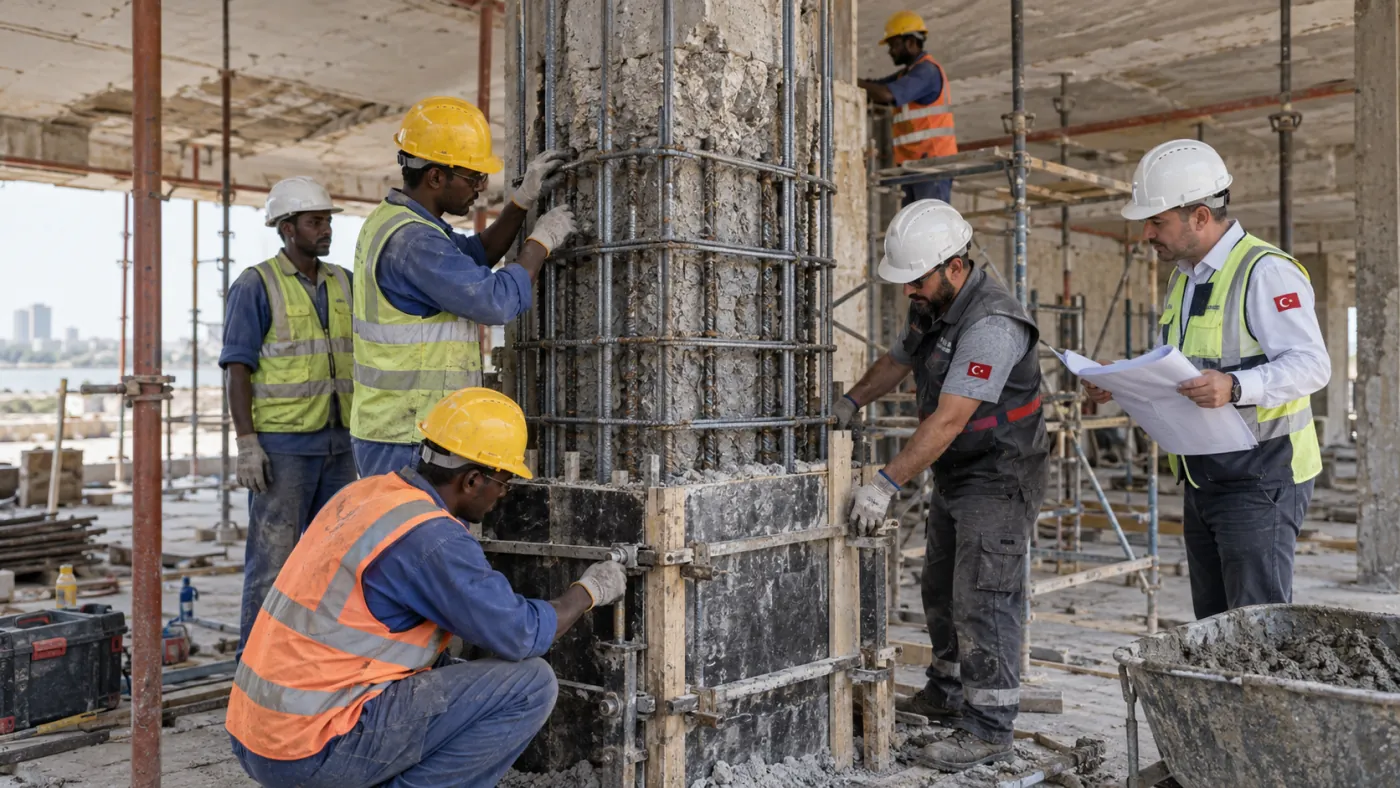
Designed reinforcement, interface preparation and compatible placement for columns, beams and piers.
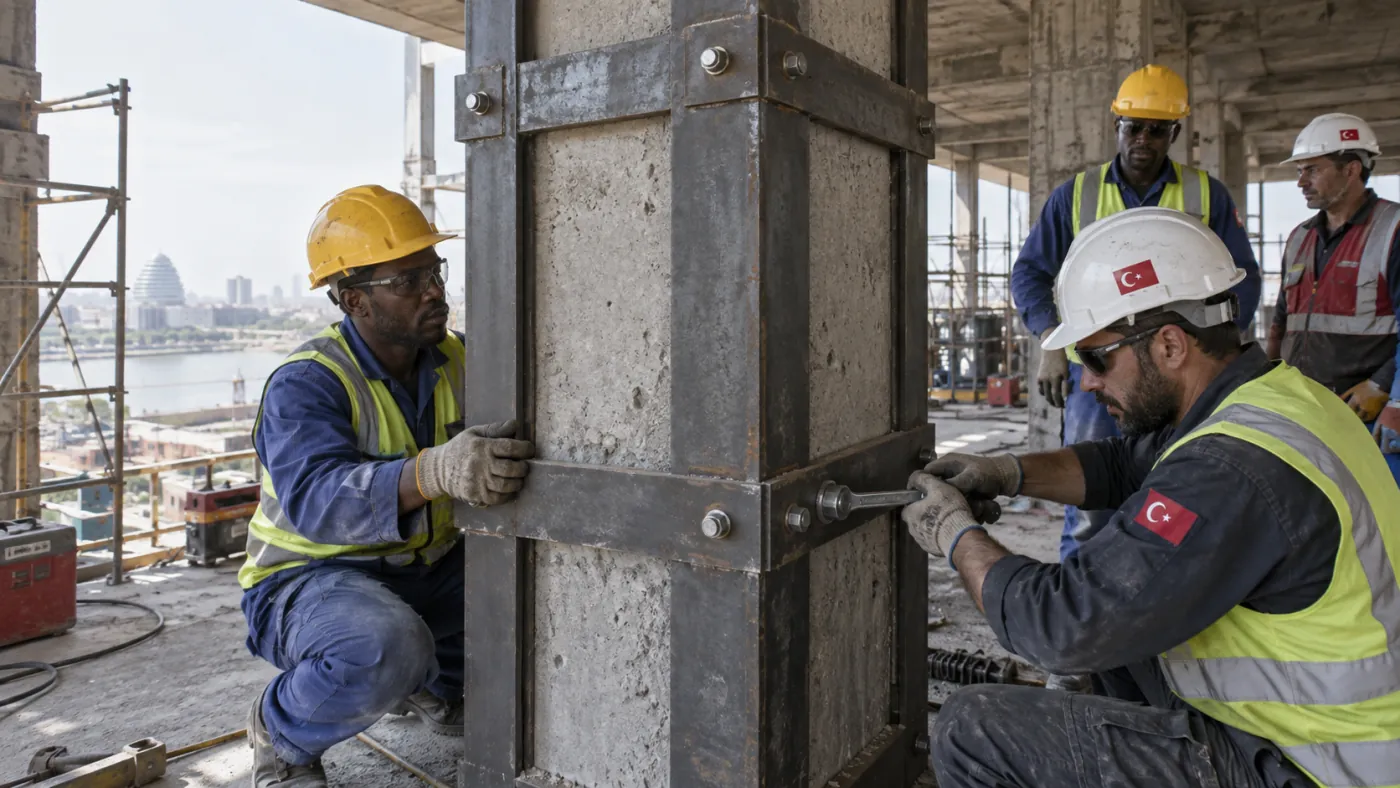
Project-specific plates, profiles, frames and mechanically connected retrofit systems.
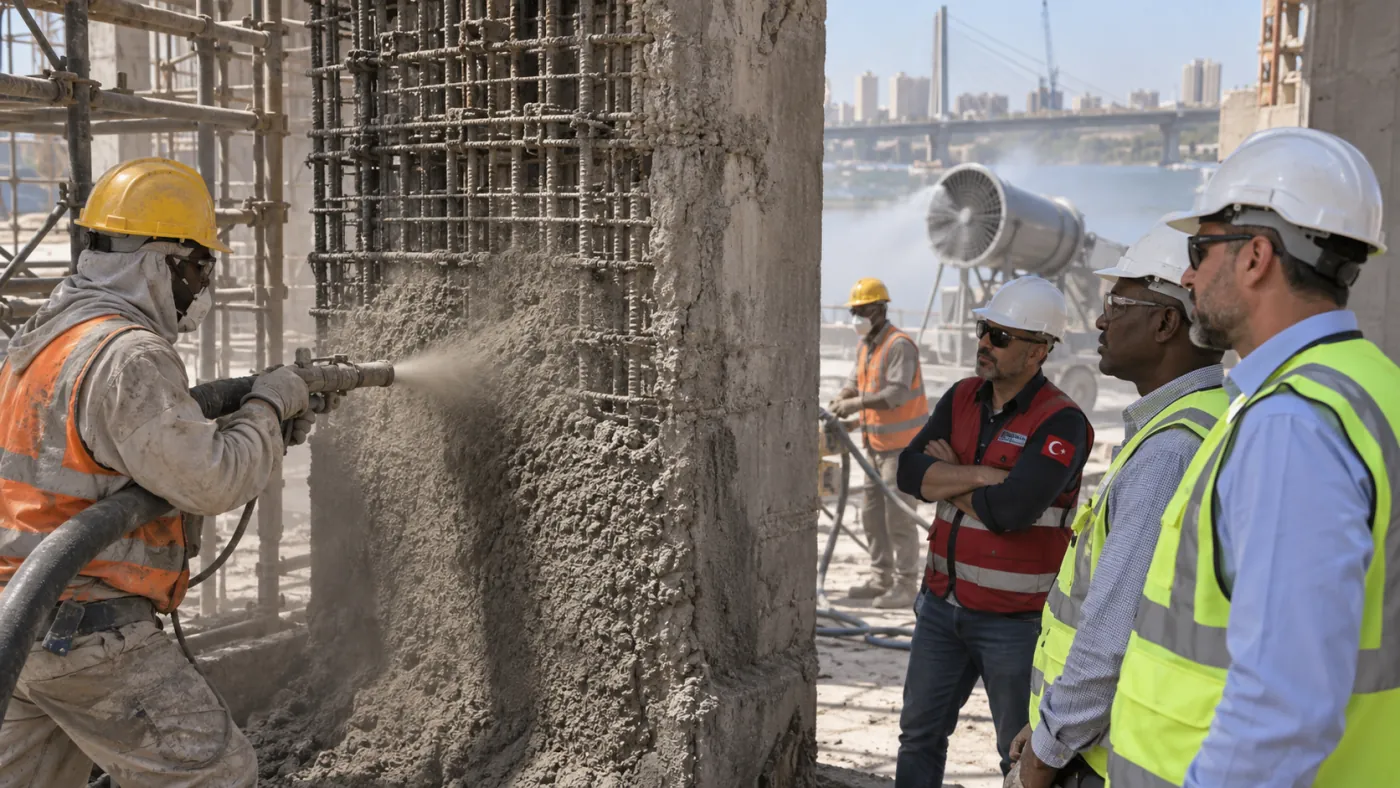
Prepared substrates, designed reinforcement, controlled placement, curing and inspection.
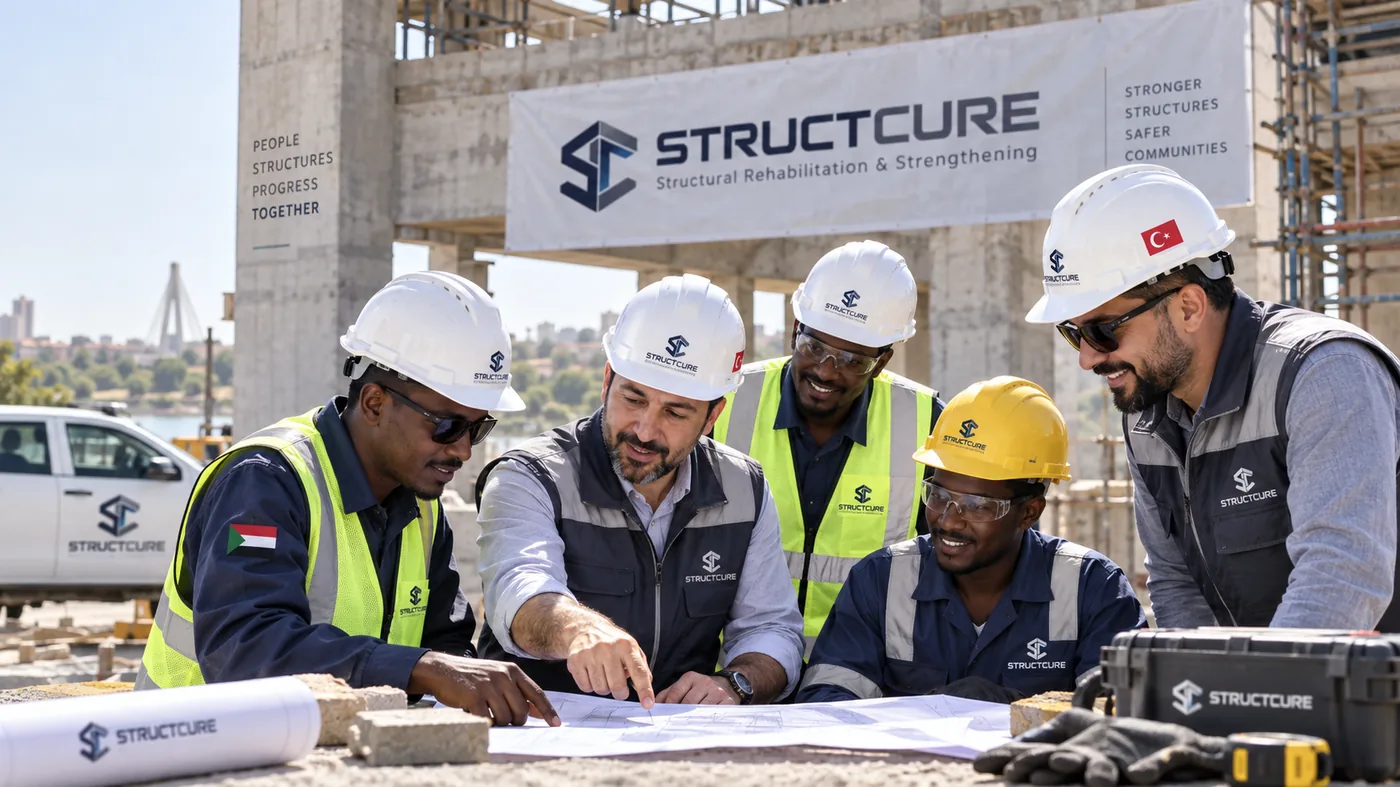
STRUCTCURE combines Turkish specialist supervision with Sudanese engineers, technicians and workers. The model is collaborative: project delivery develops local execution capacity through training, documented methods and knowledge transfer.
Phased structural interventions planned around security, access control and occupied operations.
Repair and strengthening coordinated around uptime, sensitive equipment and critical facilities.
Controlled rehabilitation planned around hygiene, dust, noise and uninterrupted healthcare operations.
Durable repair and strengthening for high-use assets serving essential public functions.
Phased interventions suitable for occupied campuses and limited shutdown periods.
Structural rehabilitation for assets exposed to heavy loads, vibration, impact and aggressive environments.
Inspection-led repair, strengthening and protection for decks, piers, abutments and related structural components.
Durability-focused interventions for transport, water, retaining and other civil structures.
Bond suitable stable cracks
Control active leakage
Add designed bonded capacity
Create retrofit connections
Rebuild damaged sections
Add designed section and confinement
Use connected steel retrofit systems
Build reinforced sprayed layers
Selected imagery illustrates STRUCTCURE methods and technical capabilities. Verified project case studies will be published as they become available.
Capability demonstration; not presented as a completed STRUCTCURE project.
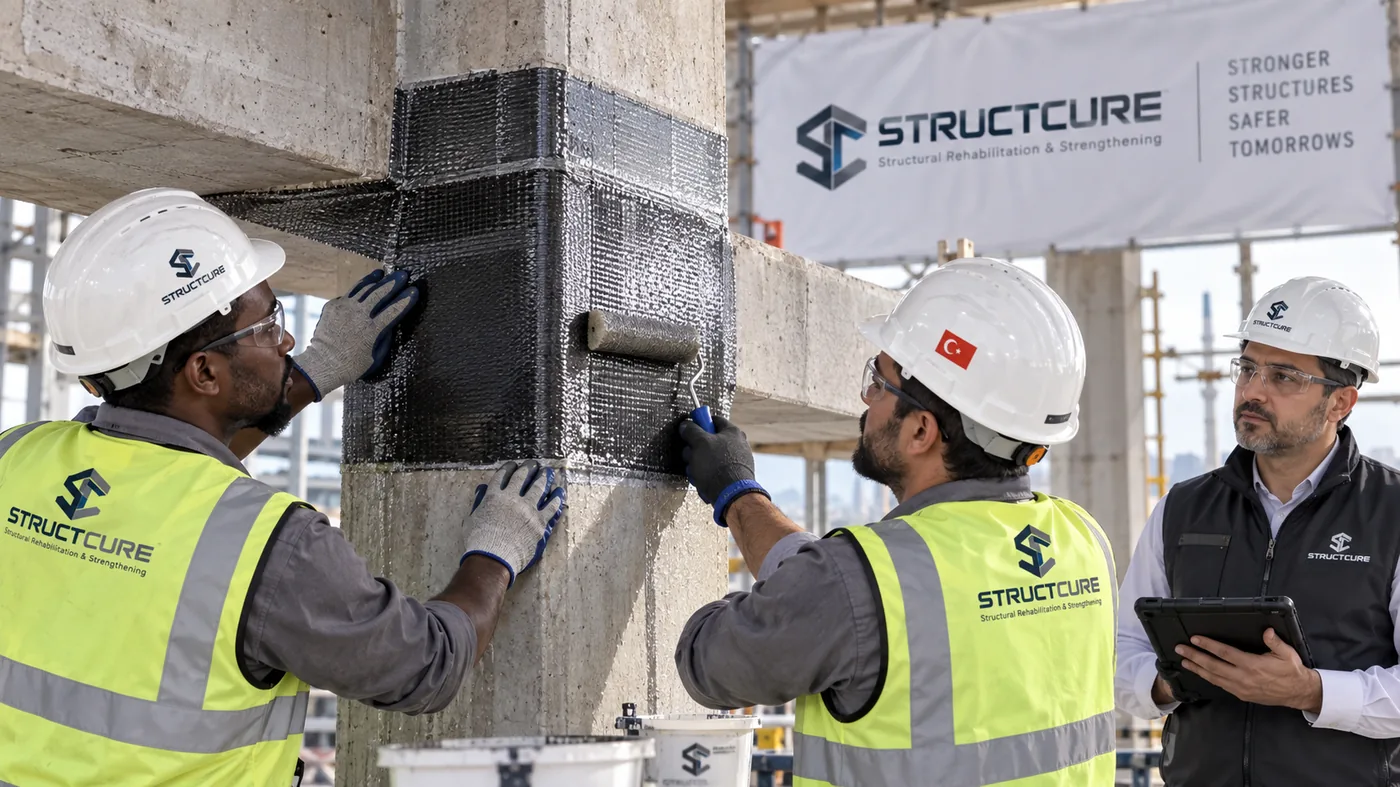
Capability demonstration; not presented as a completed STRUCTCURE project.
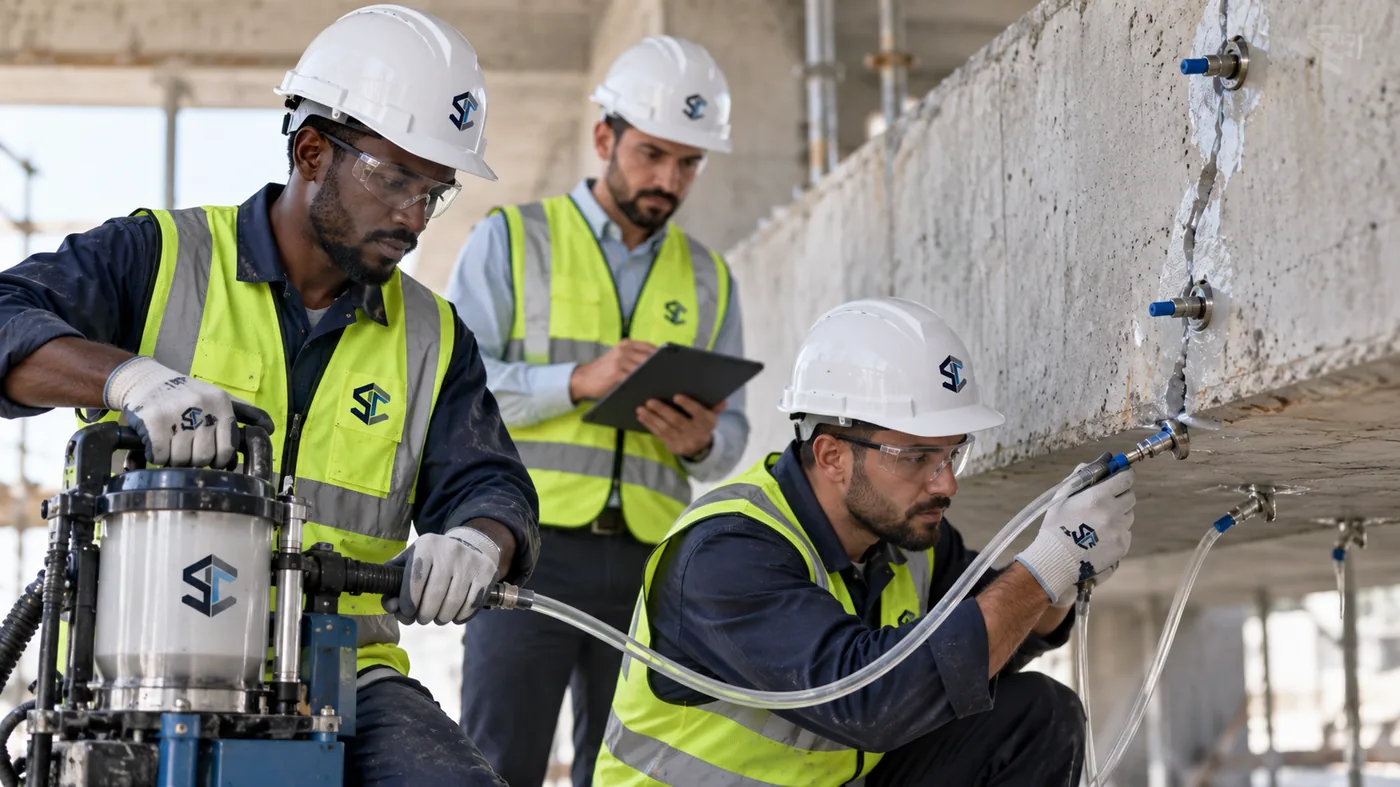
Capability demonstration; not presented as a completed STRUCTCURE project.
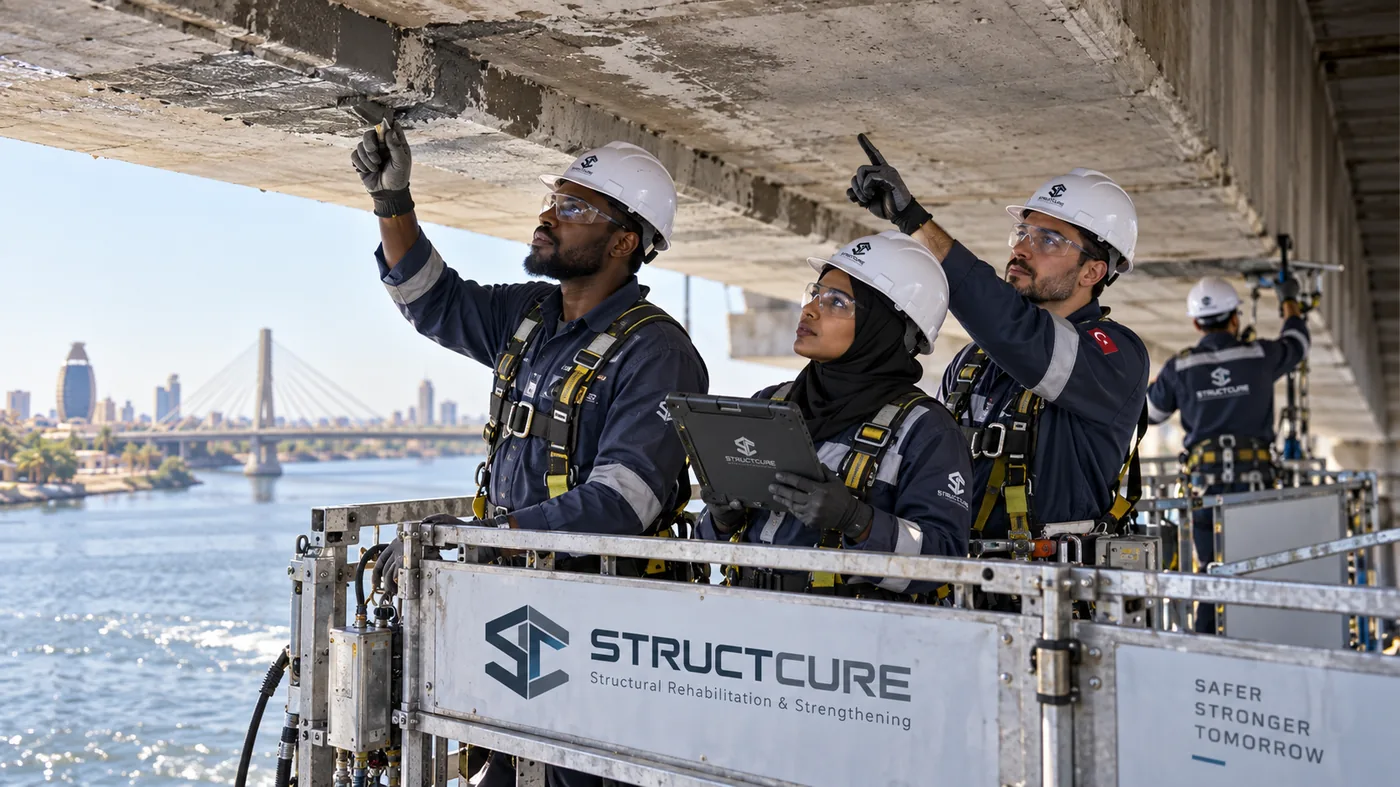
Capability demonstration; not presented as a completed STRUCTCURE project.
Capability demonstration; not presented as a completed STRUCTCURE project.
Capability demonstration; not presented as a completed STRUCTCURE project.
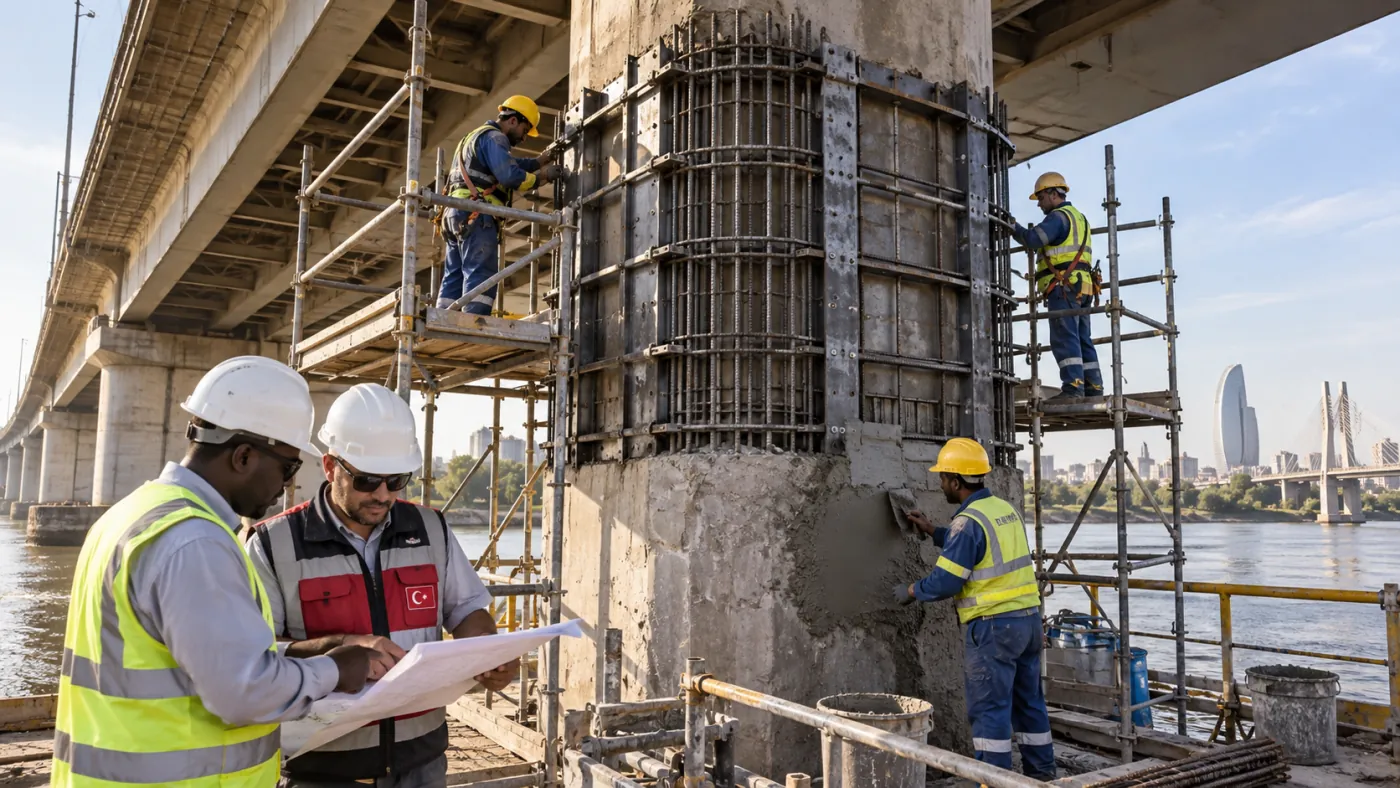
Capability demonstration; not presented as a completed STRUCTCURE project.
The value lies in the complete system—not a product used in isolation.
Structural repair, strengthening and protection are our core discipline—not an extension of general contracting.
Materials and strengthening systems are selected around substrate condition, exposure, compatibility and engineering requirements.
Critical stages are managed through defined procedures, hold points and site quality controls.
Surface preparation, installation, curing and environmental conditions are treated as part of the complete system.
Methods, materials, inspections and execution records are organized to support traceable project delivery.
International specialist knowledge is combined with Sudanese engineering and field capability through practical training and knowledge transfer.
Structural rehabilitation is a coordinated process that assesses defects and applies repair, strengthening or protection measures to recover required performance and extend useful service life.
Often yes, but the cause, reinforcement condition, load path and remaining capacity must be assessed before a repair or strengthening design is selected.
Structural repair addresses performance, load transfer or deterioration mechanisms. Cosmetic repair primarily changes appearance and should not conceal unresolved structural problems.
Selection follows verified condition, engineering requirements, exposure, access, compatibility and the intended service life—not the appearance of the defect alone.
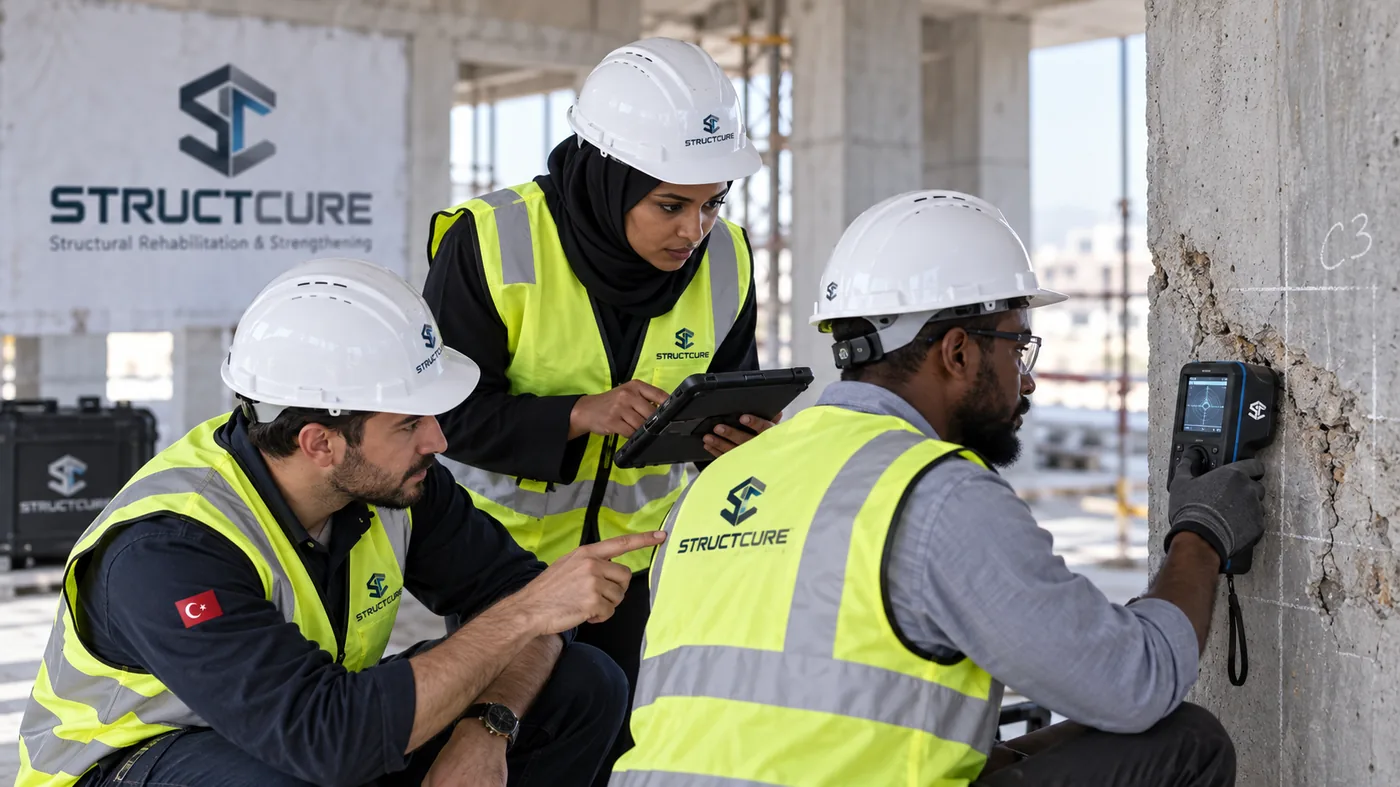
Share the location, structure type, observed issue and available drawings, photos or reports.